The Invisible Friction Killing Your Team (And How to Fix It)


 Pandora
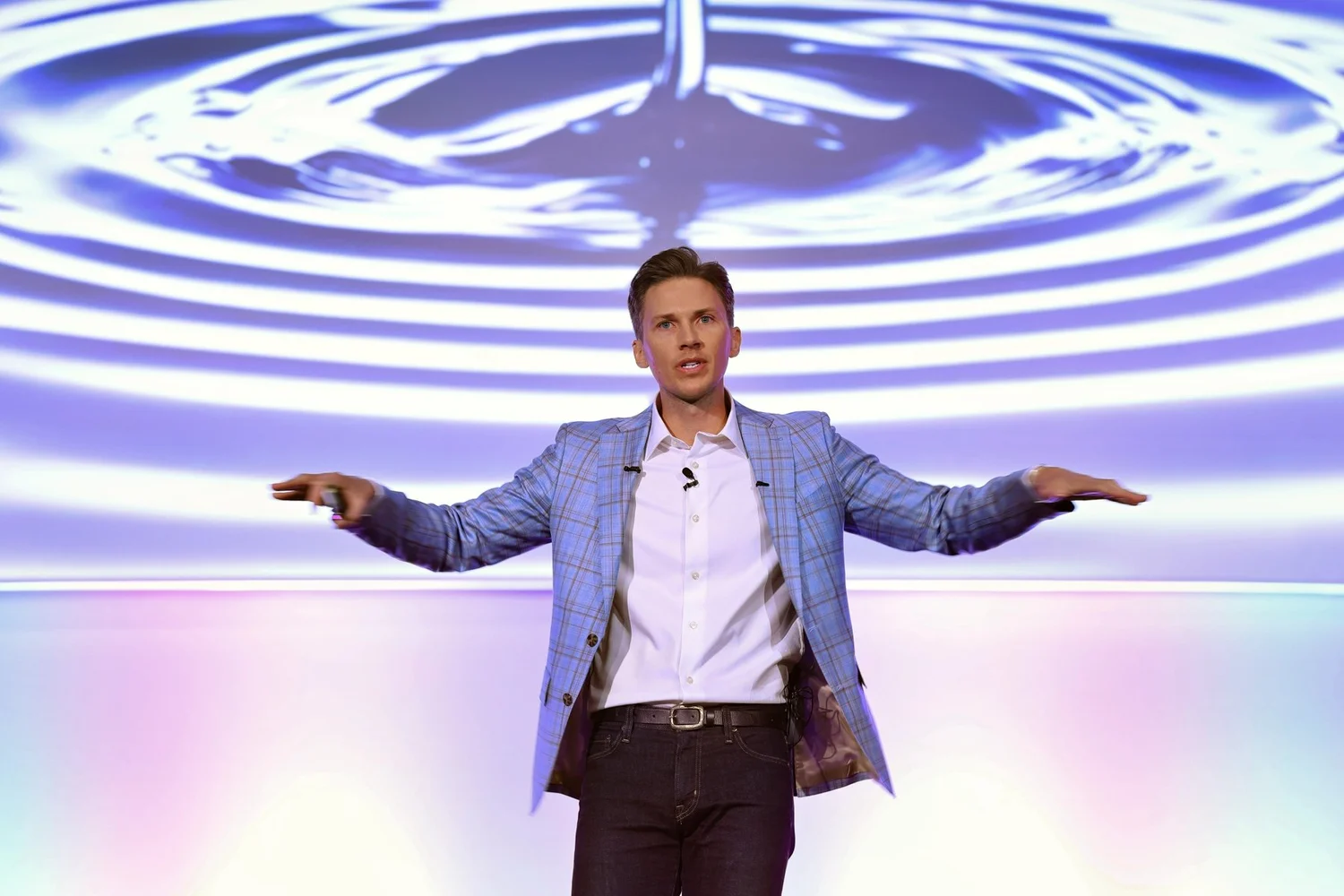
 Invisible friction is the quiet tension that builds when people stop trusting each other and start protecting themselves — and it's silently slowing down fast-growing teams. Chris Rollins, creator of Ripple Effect Leadership™, breaks down how new managers lose team trust and how to rebuild it.
When your best individual contributor gets promoted to manager, something quietly breaks. In this episode of Leading Through Growth, Chris — a former Head of Organizational Development — unpacks the mindset shift from doer to leader, why vulnerability is the hardest leadership skill, and how small everyday moments build (or destroy) trust on a team.
Chapters
- 00:00:00 Intro
- 00:01:24 The Genesis of Ripple Effect Leadership
- 00:02:49 From Division I Athlete to HR Executive
- 00:08:23 The Work That Made Acceptance Possible
- 00:09:55 What Is Invisible Friction and Why It's Killing Your Team
- 00:13:41 The Basement Story: When Leaders Miss What's Right in Front of Them
- 00:16:38 Red Yellow Green: Simple Check-Ins That Build Trust
- 00:17:20 Legacy Isn't What You Leave Behind—It's What You Cause Every Day
- 00:23:17 The Blue Ribbon Moment: Humanity in Ordinary Interactions
- 00:25:09 Why Vulnerability Is So Hard for Leaders
- 00:27:24 Courage Isn't Who You Are—It's What You Do
- 00:30:20 The Mindset Shift from Doer to Leader
- 00:32:11 Notice What Others Overlook
- 00:32:59 The 38.7 Percent Profit Advantage of Being Seen and Heard
- 00:33:50 Break Your Routines to Wake Your Brain Up
- 00:35:12 The Symphony Study: Mindful vs Performative Leadership
CONNECT WITH CHRIS ROLLINS
Website: https://www.chrisrollins.me
LinkedIn: https://www.linkedin.com/in/christopherrollins
#Leadership #NewManager #TeamTrust #LeadershipDevelopment #RippleEffectLeadership
WEBVTT
1
00:00:00.031 --> 00:00:08.502
Organizations where people felt seen and heard by their leaders are 38.7% more profitable than organizations that are not.
2
00:00:08.603 --> 00:00:35.755
Here's something that I see at growing companies all the time, and it's really a problem. An individual contributor gets promoted to manager, but then no one actually teaches them how to lead people. And so they do whatever comes natural to them, which sometimes includes not trusting others and protecting themselves. It creates this weird environment where you can't necessarily see it, but everyone feels it. And my guest today calls that invisible friction. You know how it goes when we're in meetings and like everyone's nodding an agreement?
3
00:00:35.755 --> 00:00:54.014
Maybe the CEO is there and everyone wants to just be like the yes person, but nobody's actually in alignment. That's creating invisible friction. Someone who just keeps getting interrupted in meetings so they stop speaking up. That's creating invisible friction. Chris Rollins became a top HR executive by 30 and then he left to build Ripple Effect leadership. Chris Rollins.
4
00:00:54.908 --> 00:01:24.608
In this episode, we talk about a mindset shift that will take you from doer to leader. We talk about why vulnerability is so hard and what leaders can do about it. And we also talk about those small moments that create the biggest ripples. If you have a team and you're leading through growth, this episode is for you and it's going to get a little personal. Let's do it. Here's my first question for you, Chris. What's your handicap? What's your handicap?
5
00:01:25.199 --> 00:01:51.912
Oh, nice. Really put me on the spot here. My index, my handicap index is something like a 2.5. Really? So my handicap's around like three or four, depending on the course. Yeah, so we're never going to play golf together is what I just said. No, we got to play anytime, anyplace, for sure. Do you still play very much?
6
00:01:51.912 --> 00:02:21.899
I don't play as much as I would like to, you know, I, I'm just now it's Friday, you know, as we're recording this, I'm thinking about my weekend and I live in Tampa. So the summers are hot here, but I'm at least trying to get to the driving range this weekend to hit some balls. And it's like golf is my happy, it's being on a golf course or near a golf course is my happy place. So, you know, if I can spend an hour, even just hitting balls, like it just gets me into a
7
00:02:21.899 --> 00:02:49.102
Yeah, I know you're sharing your work about being a Division I athlete going to play golf. And there's a lot there that I think we can talk about, probably not relative to leadership. But I am curious to just hear about some of that experience and how you feel like it's shaped you today. Well, yeah, thanks for asking that. I mean, I think...
8
00:02:49.658 --> 00:03:17.485
Playing sports is, there's a lot of lessons that you can learn in leadership from playing in sports and from being a collegiate athlete. I mean, I, you know, I intentionally went to a college, I went to Davidson College, it's a small liberal arts school in North Carolina, just outside of Charlotte. And I intentionally went there, I'm from New York, but I wanted to go to school further in the south to get the warmer weather all year round.
9
00:03:17.671 --> 00:03:45.295
You know, it's a competitive school academically. It's also Division I athletically. So, you know, I wanted kind of the best of both worlds. And that was not easy trying to keep a high GPA while also being committed to athletics, being committed to my team. But as you know, golf is a test of patience. It is a test of persistence and resilience and bouncing back after the bad shots and the bad rounds. And so there's a lot
10
00:03:45.295 --> 00:04:04.567
that we can learn and there's a lot that you can learn from about someone's character as you also know when you take them out on a golf course like are they being a big baby about things that aren't going well or they should kind of showing that they've got some emotional intelligence and are able to keep it together and you know and enjoy the enjoy the time
11
00:04:04.988 --> 00:04:18.117
But yeah, I think back fondly to my time playing golf in college. But it was also a very challenging time too. I was navigating my sexuality and coming out and sort of
12
00:04:18.607 --> 00:04:42.198
kind of hiding that from my teammates and my friends and figuring out like when and how's the right place to, to make that known. And, um, yeah, that was, uh, definitely a stressful time in my life. Yeah. I could imagine that. How, how difficult was it to come out like to your parents, to your dad? I know he got you into golf. I'm wondering like how difficult was that conversation?
13
00:04:42.957 --> 00:05:01.165
Yeah, I mean my whole family plays golf and my grandparents are probably actually the ones that initially got me into it. And fortunately, I got to play a lot of golf with my mom growing up too. But, you know, I grew up in a household with three boys, me and my two brothers.
14
00:05:01.317 --> 00:05:16.167
You know, there's plenty of jokes being thrown around that, as you know, like these jokes are not really meant to do harm, but they, um, their signals and their cues that, that maybe say, you know, I don't know, like you start to question.
15
00:05:16.454 --> 00:05:45.040
whether or not you're safe to talk about these things. And so, you know, I didn't expect my dad to have a really, you know, dramatic response, which certainly could have been the case and certainly is the case for a lot of people. But, you know, I finally, it was my sophomore year, he was coming to visit me at a golf tournament in Georgia. And I was like, I gotta tell him. Like, I just felt this tension and this distance building between us because,
16
00:05:45.040 --> 00:06:08.075
I was holding on to something that was a big part of who I was. And if you really knew me, you'd know that I like deep connection and it's hard to have deep connection when there's a big part of me that that's being held in secret. And so, yeah, that night at dinner, I just finally the last like moment before he's, you know, stood up and was signing the check, I was like, Dad, I got to tell you something. And
17
00:06:08.075 --> 00:06:23.853
And I told him and he was just told me how proud he was and how amazing that was. And, you know, the, I talk about that as a ripple effect moment, you know, the way he chose to make me feel seen and heard, even though internally he was.
18
00:06:23.853 --> 00:06:41.572
was probably scared, curious, confused, concerned. He made sure that his love for me was very clear. And that's kind of what inspired this idea of the ripple effect is like,
19
00:06:41.572 --> 00:07:03.020
That single moment had such a profound impact on my life and was, I think, a key reason why I was able to become successful in the way that I was in the corporate world. And so much of my work has been about helping organizations develop leaders who create the same kinds of ripple effects for their people. And all of that is really...
20
00:07:03.239 --> 00:07:14.562
centered around this idea that I call ripple effect thinking, which I'm happy to talk more about, but that's kind of the genesis of that. And that moment that certainly stands out for me.
21
00:07:16.250 --> 00:07:37.748
Yeah, and I wonder what was inside of him that helped him respond that way, right? Because like you said, that's not the typical response that you maybe expect to hear. There's a spectrum, I'm sure, but there's something inside of him that made him respond that way. So kudos to dad for being able to do that.
22
00:07:38.390 --> 00:07:53.392
Well, I always, thanks for acknowledging that. And I certainly have acknowledged him plenty. And, you know, I don't think he hates that I, that I share the story a lot because it's sort of painting my dad as his hero. And, yeah.
23
00:07:53.392 --> 00:08:23.378
And one of the reasons that I share this story very openly is because I think we need sort of positive examples and hopeful stories and to give people a sense of hope, certainly for people who are dealing with this themselves, but also for parents or anyone else. And it doesn't have to be related to coming out. It's anything when it comes to, you know, something maybe that you hold shame around or something that you feel embarrassed to tell someone else.
24
00:08:23.378 --> 00:08:48.910
But, you know, people will say often to me that I'm so lucky that my dad responded that way. And what I'm very clear about is like, you can think about it as luck, but also I think one of the reasons my dad was able to have that response was because of the work that was laid down for years before I even had that conversation with him. You know, by, I would call them my LGBTQ ancestors who were doing the work.
25
00:08:48.910 --> 00:09:07.709
laying down the work to make that conversation with my dad feel safe. My dad's dad, my grandfather, would not have had the same response. But sort of the exposure over time, it's like just enough for my dad to then pause in that moment to say, let me kind of listen here and be present.
26
00:09:09.177 --> 00:09:37.240
Yeah, it's that's a really good point. It's interesting to see how, you know, maybe what starts as a handful of people can, I guess, to use your term, cause a ripple effect, right? You think about some of the conversations that have happened over that in that space over the last 30 years, and it has helped educate us all on some of the nuances and be more accepting of people who have different lifestyles than what we would
27
00:09:37.240 --> 00:09:55.482
choose or what we may even desire for other people or whatever the case may be. And so, yeah, it's funny how, you know, a handful of people can cause this great impact that, you know, sometimes even in our subconscious, we don't even know it's educating us to help us navigate these situations in a more positive way.
28
00:09:55.972 --> 00:10:20.288
Well, I think the broader application here, especially if you're thinking about like high growth companies, quick, fast growing companies, is that there's going to be a lot of change. There's going to be a lot of disruption. There's going to be a lot of competing motivations and personal emotions that are kind of wrapped up in all of that. And yeah.
29
00:10:20.288 --> 00:10:46.276
You know, it's about noticing the moments that we can show up with more presence and with more humanity to be there for people to create these ripple effect moments. You know, I think some of the challenge with high growth companies or companies where, you know, individual contributors who are really successful in their job then become managers but don't necessarily have the training to become great people leaders is,
30
00:10:47.508 --> 00:11:17.292
and I experienced this for myself, what happens often is that people stop trusting each other and start protecting themselves because you're a new manager, you're a new leader, you're looking out for yourself, you wanna look good for your manager, and so there's this protection that happens, and when you have that protection, you build distance between other people, and that's the genesis of what I call invisible friction, is people stop trusting each other and start protecting themselves, and then there's all this,
31
00:11:17.292 --> 00:11:39.348
Stuff that happens in between people in our relationships that cause friction that is hard to see, but certainly something that we all feel, you know, it could be, you know, someone who just keeps getting interrupted in meetings. So they stop speaking up. That's something that causes invisible friction for that person or.
32
00:11:39.702 --> 00:11:57.421
You know how it goes when we're in meetings and like everyone's nodding in agreement. Maybe the CEO is there and everyone wants to just be like the yes person, but nobody's actually in alignment. That's creating invisible friction. Or like having the tough conversations that you have to have with people, but you're avoiding it because it's uncomfortable. Yeah.
33
00:11:57.657 --> 00:12:20.573
And that creates more invisible friction. And so being a former head of organizational development for, you know, we're a 200 person company, I saw this happening all across the company in these different pockets of the business that was slowing things down. And so it's really costly because it's hard to see and it impacts every single relationship.
34
00:12:21.704 --> 00:12:42.157
What do you think is at the heart of invisible friction? Is it survival? Is it everyone trying to protect themselves? Or is there something else going on there? I don't know that there's one answer to that question. I think it probably depends.
35
00:12:42.494 --> 00:12:59.605
on the person or the situation, you know, there's so many different variables and dynamics at play at work. You know, someone's got a promotion that they're gunning for, so there's like that individual motivation that might be impacting that the way that they interact with other people.
36
00:12:59.605 --> 00:13:28.900
There might be competing incentives for different departments, and that's causing friction between how people are collaborating or not. So I guess if you were to find the common theme, maybe it's kind of looking out for yourself. I call it a siloed mindset where you're so focused on your tasks, your goals, your deliverables, your agenda, that you're not thinking about the...
37
00:13:28.900 --> 00:13:40.628
you know, the, um, the invisible friction that you might be creating because of the interconnectedness of it all. So I don't know. What do you think? What do you, what do you, what do you think might be at play there?
38
00:13:41.793 --> 00:14:06.802
Well, there's a story that comes to mind of a executive team that I work with. And there was one leader who had someone on his team who, when they first started with the company, rock star, like speaking up in meetings, bringing ideas, breaking through barriers, doing all the things. And then they just kind of went silent. They didn't get bad at their job. They were still doing their job, but like something was missing. That spark was gone.
39
00:14:06.802 --> 00:14:30.460
And when I talked to that leader, it turns out that their house was six months behind on a construction project. They had to move in with his in-laws and his wife and his mother-in-law don't get along. And he's in an unfinished basement, you know, just a desk and a power strip. It's, you know, moldy and stuff. I think about the basement on Home Alone.
40
00:14:30.460 --> 00:14:45.327
where Kevin doesn't want to go down and do laundry. That's the basement. It probably didn't look like that, but that's what I'm thinking about in my head. And they're wondering like why he's not showing up the same. And when I talk to him, it's like, I, I, he's still passionate about the work.
41
00:14:45.698 --> 00:15:09.087
Still excited about doing what he's doing, but he felt invisible at work because he couldn't talk to anybody there about that. He didn't feel like they saw him as a person or that it would make him look bad because he's going through something in his personal life. And I think there's a couple of things there. I think, you know, we can talk about this. People will try to separate their professional and personal lives, which I think is kind of a silly thing to do.
42
00:15:09.087 --> 00:15:24.511
But also, I think it's to your point, I think it was some invisible friction there that was caused because someone had blinders on. Someone was in a silo. They were thinking about what they need to do and what they can get and not what they can give to someone else.
43
00:15:25.743 --> 00:15:42.044
Yeah, that is such a heavy burden to carry, you know, showing up to work every day when there's all of this stuff. And we all have a version of that, you know. Yeah. Maybe you got just like a really bad fight with your spouse this morning. And, you know, it's...
44
00:15:42.044 --> 00:16:12.031
you're just not going to be showing up as your best at work that day. And, um, something, you know, Liesel, um, something that she talks about and that I've done in my work too, is doing a check-in with a red, yellow, green, sort of just emotional check-in at the beginning of meetings. Like, where are you coming from today? You know, are you red? Yeah. Things are not good, you know, or you, you, you're grooving and it's green and you don't need to go into it, but just having a sense of like where people are, that sometimes helps. And maybe I'll take a little bit off your plate or,
45
00:16:12.031 --> 00:16:36.938
Just have a little more compassion for you. So, man, that is the kind of stuff that resolves the invisible friction because a lot of it comes down to not feeling safe to share, not feeling comfortable enough to be vulnerable and to open up about those things. And that's where you can create some real trust and connection is when you start to bring that into the work.
46
00:16:38.153 --> 00:16:53.155
Yeah. And really connecting with them as a person. I like the check in idea. Lisa shared that with me before. And I really, really enjoy that. I also think it's good to have a meeting, a check in meeting every once in a while where the only rule is you don't talk about work.
47
00:16:53.155 --> 00:17:19.177
Like I want to sit down and say, OK, Chris, how's life? How's everything going? It's like that. Not the project. As soon as I say the project, you know, OK, this is a work meeting. I got to focus on the work stuff. But that human connection, I think that we often overlooked that. And within that human connection, I think that's where we can have some of those ripple effect moments. Can you talk to me about ripple effect thinking, what that is and how that applies to leadership? Yeah.
48
00:17:20.155 --> 00:17:43.493
Absolutely. So the orienting belief for me that is sort of the genesis of ripple effect thinking is this idea that legacy isn't something that you leave behind. It's something that you cause every day. The moments that are maybe the most important moments aren't the ones that you'll remember before.
49
00:17:43.898 --> 00:18:10.072
They're the ones that someone else never forgets. And so my whole work is about helping people get present to the significance of their own influence, helping them see and recognize that they influence a lot more than they realize. A frontline leader, someone who doesn't have the traditional authority or power in an organizational structure,
50
00:18:10.375 --> 00:18:32.093
they're interacting with humans every day and they're creating impact, whether they realize it or not. And certainly as you do go up the hierarchy of an organization, sometimes that impact carries a lot more weight. And so ripple effect thinking is this awareness that the way you show up in a single moment with a single person is,
51
00:18:32.262 --> 00:18:54.098
has far-reaching impact beyond that moment itself. It impacts countless people. And so just think about like a simple example. The other day, I was ordering food for takeout. And so I called up, I love chicken wings, I called my favorite place to get chicken wings. And the woman taking my order was,
52
00:18:54.807 --> 00:19:11.311
She was clearly new to this restaurant, because I order this a lot. And she was asking a lot of thoughtful questions, like, do you want the ranch in this? Was ordering two sets of wings, do you want the ranch in this one, or the blue cheese in this one? And just to be clear, do you want this or that? And she was being very thorough.
53
00:19:11.311 --> 00:19:31.865
And when I went up to pick up the food, she was, again, so kind, so thoughtful. And I said, thank you for being so kind. I really appreciate how thoughtful you've been. And it totally caught her off guard. And it's such a small moment, but I can tell it hit her really hard.
54
00:19:32.219 --> 00:19:57.278
And I know she carried the energy of that moment, certainly through the end of her shift, probably to the next day. And that is like such a silly, tiny example. But the way that we show up for each other, a teacher who believes in you, a manager who invested in you, or someone who made you feel small, othered, or invisible, that stuff sticks with you. And I think...
55
00:19:58.088 --> 00:20:22.523
I am just so committed to helping people realize that the way that they move through the world is impacting people for better or worse. And if we can apply a ripple effect mindset to the way that we think and show up with each other, just think about the potential for what human connection could actually feel like and what belonging could actually look like in an organization. So I get a little passionate about this.
56
00:20:22.810 --> 00:20:45.642
No, this is great. I'm thinking about your career, right? And being SVP at 30, I wonder who that ripple effect leader was for you. I'm sure there's a point in time or a person maybe that you can point back to in your career and say, man, if it wasn't for that conversation or that interaction or that thing, maybe my career goes into a different trajectory.
57
00:20:46.739 --> 00:21:05.234
There's, you know, I think I was fortunate to have a lot of really, really good managers. But there's also, it's just the accumulation of those moments is what I think helped me kind of keep finding that path. And by the way, I, you know...
58
00:21:06.415 --> 00:21:26.885
whatever rose through the ranks pretty quickly in corporate America, but got to a position that I thought I always wanted and realized, geez, this isn't actually where I want to be. So, you know, I, and I think part of that is like being committed to this self reflection of like, who do you want to be in the world? What kind of impact do you want to have? And how do you want to bring that to life?
59
00:21:27.037 --> 00:21:54.644
And I was always asking myself those questions and certainly working with other people to have them reflect back to me, you know, what their perspective. But mentors, managers, coaches, friends, parents are all people who can create ripple effect moments in our lives to help shape, you know, our careers and who we eventually become. Are ripple effect moments created by luck or intention?
60
00:21:56.095 --> 00:22:19.113
Oh, good question. What I like to say is that, you know, you don't... Ripple Effect leaders don't curate extraordinary moments. They just let their humanity show in the ordinary ones. Yeah.
61
00:22:19.433 --> 00:22:34.435
So when you can bring your humanity into ordinary moments, you can create a ripple effect moment for somebody else. And so there is absolutely intention that is required in this work.
62
00:22:34.435 --> 00:22:58.972
Because the ripple effect mindset is, I define it with five qualities, vulnerability, kindness, curiosity, empathy, and humility. So these are not new things for anybody, but they are really hard to implement. They're really hard to practice. And so that's why it's a practice and that's why it takes intention to put those into practice.
63
00:22:58.972 --> 00:23:16.943
I'll tell you a quick story. I mentioned just before we got on this call, I lost my brother in May just a couple months ago. He had stage four colon cancer. Also a big golfer and golf was a big part of his life and journey through that process.
64
00:23:17.112 --> 00:23:44.011
But back in April, I was standing on the jet bridge in Tampa, about to board a flight to New York City that I had just booked a few hours earlier because I got a call that he was going into the ICU. And, you know, I didn't know if I was going up there to say goodbye or what the case may be. So obviously I'm very emotional, but I'm standing there just about to board the flight and I feel this hand rest on my shoulder and I turn around and there's this woman. She's like in her mid 60s.
65
00:23:44.011 --> 00:23:52.550
and she just strikes me as very motherly. And so I look at her, and she asks me, she says, what's that blue ribbon on your backpack for?
66
00:23:54.288 --> 00:24:21.946
And I start getting emotional. I say, it's for my brother, Markham. You know, he's got colon cancer. I'm actually on my way to see him right now. And she says, well, how old is he? And I said, 41. And then I completely lose it. I like am bawling my eyes out, having a breakdown. And I don't know what to do. So I just literally fall into this woman and I give her a hug, like a long five second hug. And I pull back and I'm just like, thank you. I really, really needed that.
67
00:24:22.300 --> 00:24:44.255
And it was such a small moment that I don't think she... There was something in her that prompted her to say, let me check in with this person, or let me... There's like a curiosity that she was following. But I don't think she was trying to create a ripple effect moment. I think she was just letting her humanity show.
68
00:24:44.558 --> 00:25:07.762
This person's carrying a blue ribbon. I'm curious what that is. I want to connect. And that small moment has stayed with me for months. And it will stay with me forever because we experience a ripple effect moment together. And I think the more that we can let our humanity show in these moments, we're going to create extraordinary impact that's going to help. That's going to stick with people in a really positive way.
69
00:25:09.415 --> 00:25:25.700
Yeah, I'm sorry for your loss. Thanks for sharing that story. You talked about sharing your humanity with others. I think it's Brene Brown, maybe, who has a quote about vulnerability. It's like vulnerability is sharing your humanness with others. Why do you think vulnerability is so hard for leaders?
70
00:25:29.986 --> 00:25:45.460
I think it comes back to what I was saying earlier about sort of self-protection. There's, I don't know, I think there's a desire to protect one's self, one's job, one's career, one's reputation.
71
00:25:45.933 --> 00:26:07.702
And I think the narrative is that vulnerability pokes holes in that protection and makes me feel less or be less protected, safe. But I think the truth is when you do show more of your humanity and more of your vulnerability,
72
00:26:08.461 --> 00:26:16.527
you're creating more safety for other people. And that has a much greater ripple effect than holding that closer to your chest.
73
00:26:17.776 --> 00:26:45.400
Yeah, I agree with that. I think one of the tough parts about vulnerability is you if you want that from other people, you have to be the first to give it. And when you're the first out there, man, it feels scary. It feels like you're exposing yourself or, you know, something bad is going to happen. All the negative thoughts that you could have in your your brain pops up. And I had a leader share with me like I can't tell them I don't know that because then they won't believe me or they won't think I'm credible as a leader. But yeah.
74
00:26:45.400 --> 00:27:05.262
when I think about the stories that I've heard or the experiences that I've had with people being very vulnerable, it doesn't make me want to push them away. It actually makes me want to like bring them closer. Um, and even as I hear your stories, I can follow a path of your career where there's a lot of vulnerability. There's a lot of courage. There's, you know, a lot of, um,
75
00:27:05.718 --> 00:27:24.567
just openness that comes with that, even to get on the stage and share the way that you do. It takes a lot of vulnerability. It takes a lot of courage. I wonder, do you see yourself as a courageous person? You know.
76
00:27:24.668 --> 00:27:53.575
I, it's not the first word that comes to mind when people say like, how would you describe yourself? I courage is not one of them, but have I done a lot of courageous things in my life? Absolutely. Leaving my job and starting my business takes a lot of courage and a little bit of, um, I don't know, delusion maybe, um, to, to do that. Um, I think it takes a lot of courage to stand on stages and share, share my story. Um, and I think that's true for a lot of people. Um,
77
00:27:53.575 --> 00:28:12.408
You know, I've had people walk out of audiences sometimes in very conservative spaces when they hear my story. And it takes courage to show up the next time and do the same thing. You know, but to your point about vulnerability and...
78
00:28:13.910 --> 00:28:36.320
you know, not wanting to tell people that you don't know something. I think a trick that I learned is, especially when I was managing a team of people in organizational development who had technical skills far greater than I did, was being really clear about what your strengths are and what your role really is.
79
00:28:36.320 --> 00:28:59.236
And empowering other people to do the things that like fill the gaps that you might not have and giving them the opportunity to step in and flex strengths that they have or help, you know, help them work on things that they need to work on too. And so, you know, um, if there are certain things that you don't know, or you feel scared to admit that you don't know, um,
80
00:28:59.236 --> 00:29:14.525
Get really clear on what you do know and what you're really good at. Communicate that to your team and then say, hey, I could really use your expertise in this area and build a team that can support each other through your, you know, complementary strengths.
81
00:29:15.723 --> 00:29:42.740
Yeah, one of the things that I recognize when I work with leaders, especially those who are individual contributors and now they lead a team, they still have an individual contributor mindset. They still think that it's their job to get all the work done. And so they'll let someone else do it for now. But when we get busy or when things start going fast or when I get under pressure, it's like, OK, move out of my way. I'm going to do it. And they feel like and sometimes it's true. A big part of the reason why they got the job is because.
82
00:29:42.740 --> 00:29:59.243
They're the smartest in the room or they're the biggest technical expert. And I try to convey to leaders and I wonder how you do this as well. When you step into a leadership role, your job is not to do everything or even to know everything.
83
00:29:59.243 --> 00:30:17.519
It's to help drive results through others. So my question for you is if you're talking to that leader who is a technical expert, but now they're leading a team of technical experts, how do you coach them through being able to use other people's strength? How do you coach them through letting them know like, hey, it's OK, you're going to bring value in a different way now?
84
00:30:20.067 --> 00:30:30.007
Well, I think so much of what I've learned about myself and my strengths and how I help other people is less on the...
85
00:30:30.698 --> 00:30:50.240
tactical, here's like three tips that you can use tomorrow and more on the, here's how to shift the way that you think about yourself and your impact on other people and how, you know, how almost more from a psychological standpoint. And I think if we can shift the way that people think.
86
00:30:50.999 --> 00:31:02.744
again, like see their own influence impacting other people. Think about how to show up with these qualities of a ripple effect mindset. There are
87
00:31:03.183 --> 00:31:29.288
automatically going to show up in a way that creates more trust and connection with other people. And I wish when I started leading people and managing people that I had someone that was helping me get in the right mindset about, you know, how to think about myself, how to think about others. And, you know, the tactical stuff is important too. And we can talk about how to implement some of the ideas that I have.
88
00:31:29.288 --> 00:31:40.578
But there is a very different mindset from going from individual contributor to people leader. And I think we have to get some of those things clear before we...
89
00:31:41.101 --> 00:32:09.805
you know, start getting into the work. Yeah. And some of your keynotes, you talk about creating those ripple effect moments. I saw one video that was really cool where you did it in the moment with the group, which I think is amazing. If I'm a leader at a company right now and I want to be more intentional about this, I wanna be more human, how do I create those leader, those ripple effect moments at my organization? What are some ways that I could do that? Maybe even this weekend or today?
90
00:32:11.071 --> 00:32:35.354
I think one of the biggest strengths of a leader, especially someone who I would define as a ripple effect leader, is someone who notices things that other people don't or notices things that often go overlooked. So one thing I would recommend is next time, I guess in the work context, if you're in a meeting or you're on a Zoom call, however people are gathering,
91
00:32:36.097 --> 00:32:58.709
Be really intentional about noticing people's body language, people's participation, people's lack of participation. And just maybe spend the first time doing this just noticing. And then maybe there's someone who's not speaking up as much. Or maybe there's someone who typically is very chatty but is really quiet. Maybe there's someone whose energy just feels a little bit different.
92
00:32:59.047 --> 00:33:26.468
tuning into the humanness of the people that we're interacting with is going to create trust and connection. And people wanna feel seen, they wanna feel heard. And there's an amazing research study by Quantum Connections that was put out last year that said that organizations where people felt seen and heard by their leaders are 38.7% more profitable than organizations that are not. And so there's,
93
00:33:26.468 --> 00:33:49.115
You know, there's a sense that feeling seen and heard is sort of like soft and fluffy, but there's real research that supports this as a real business case. So just noticing things that other people would overlook, I think, is one thing that you can do immediately today, you know, as you're going through the world.
94
00:33:50.296 --> 00:34:05.973
Yeah, I would agree with that. And I think about there's pictures of leaders that pop in my head when you say that. And one of the hurdles is one of the hurdles for that is like being able to practice mindfulness. Some people. Yeah.
95
00:34:05.973 --> 00:34:34.930
We just go through life. We get in our habits. We get in our routines. And we don't even see the stuff around us. And so I try to challenge leaders to say, like, you need to do something to wake your brain up again. So, like, go a different route to work today. And that, like, you can see them get uncomfortable. It's like, no. Especially if I ask them to go a different way home. Like, go a different way home. It's like, no, when I leave here, dude, I'm going straight home. I don't want to play around with that. But sometimes we need to break up our habits or break up our routines just to kind of.
96
00:34:34.930 --> 00:34:51.957
you know, open up our eyes to things that are in our surroundings again. It reminds me of a study of a symphony where they had them play a piece that they've all played for years. And everybody's just kind of going through the motions. They play the piece, they record it.
97
00:34:51.957 --> 00:35:12.764
And then they have them freestyle, more of like a jazz artist and where they're riffing off of each other and they're having fun and they're more mindful. And they took both of those recordings and they played it to random people on the street. And overwhelmingly, people prefer the piece where they were playing mindful as opposed to the classic piece where they've been playing for years.
98
00:35:12.764 --> 00:35:36.490
To your point, I think a big part of that is like they were more in tune and connected to each other. I can't just play in a silo. I have to look over and see what you're doing to make sure that I'm playing well off of what you're doing. And leadership is so like that, man. I think the best ability in leadership is adaptability, being able to be in tune with the people around you and then make those adjustments.
99
00:35:37.013 --> 00:35:51.475
Well, it's a perfect example of what I think is emerging in not just like the world of work, but in culture at large, which is people sniff out performative anything and
100
00:35:51.914 --> 00:36:18.290
lose trust immediately when they sense there's a performative nature to what's happening. And there's such a drive towards authentic representation of like your ideas and who you are and how you want to show up. And so to me, that jazzy version is like this, let's take the mask down, like, and let's just be more ourselves and like, have a good time. And I think you see that resonating a lot more with, uh,
101
00:36:18.796 --> 00:36:38.337
with leaders that you just automatically, you're, you're just sort of, they just have a magnetism because you see and feel their humanity. Like people want that. Agreed. Yeah. Chris, this is really good, man. Thank you so much for, for sharing your story. People are watching this and they want to get in contact with you. What's the best way to do that?
102
00:36:39.502 --> 00:36:53.305
You can check out my website, chrisrollins.me, chrisrollins.me. But definitely connect with me on LinkedIn, Instagram. Love to stay in touch. Perfect. Thanks, Chris. Thanks, man.