Apple Podcasts
 Spotify
 iHeartRadio
 Amazon Music
  Pandora
 003 - How Leadership Must Evolve as You Scale
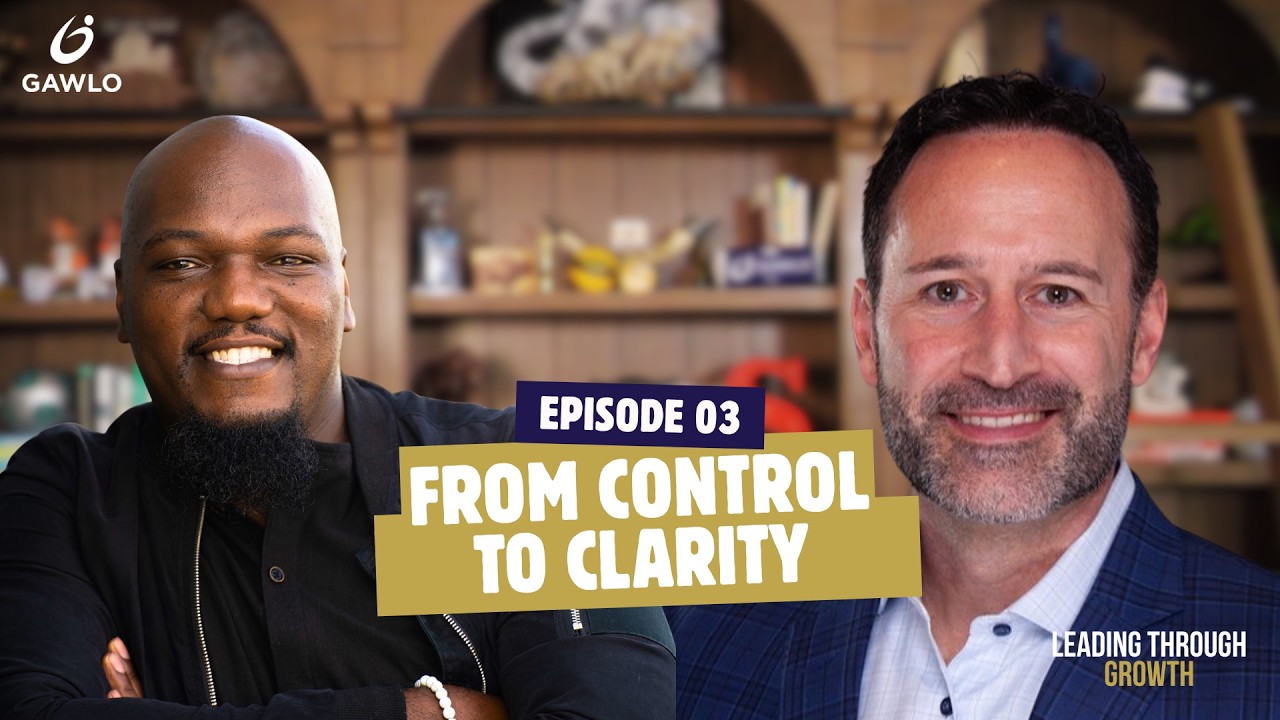
What got you here won’t get you there. In this conversation, Kevin Gearheart, President of Rehab Medical, reflects on what leadership must become as an organization grows—especially when the instincts that once drove success begin to create friction. Early in a company’s life, control drives performance. But as complexity increases, that same control can turn leaders into bottlenecks. What replaces it is not less leadership—but a different kind: clarity, structure, and trust. Kevin shares how his role has evolved over two decades of leadership and a decade in the president seat—leading through sustained, rapid growth while maintaining culture, talent quality, and operational discipline. This episode explores: The shift from control to clarity—and why it matters How leaders unintentionally become bottlenecks Why culture at scale requires structure, not just intention The role of purpose in sustaining performance under pressure Balancing transparency with confidentiality as a senior leader Why trust accelerates execution The hidden cost of ego in growing organizations How a single comment from a leader can carry unintended weight
What got you here won’t get you there.
In this conversation, Kevin Gearheart, President of Rehab Medical, reflects on what leadership must become as an organization grows—especially when the instincts that once drove success begin to create friction.
Early in a company’s life, control drives performance. But as complexity increases, that same control can turn leaders into bottlenecks. What replaces it is not less leadership—but a different kind: clarity, structure, and trust.
Kevin shares how his role has evolved over two decades of leadership and a decade in the president seat—leading through sustained, rapid growth while maintaining culture, talent quality, and operational discipline.
This episode explores:
- The shift from control to clarity—and why it matters
- How leaders unintentionally become bottlenecks
- Why culture at scale requires structure, not just intention
- The role of purpose in sustaining performance under pressure
- Balancing transparency with confidentiality as a senior leader
- Why trust accelerates execution
- The hidden cost of ego in growing organizations
- How a single comment from a leader can carry unintended weight
WEBVTT
1
00:00:00.183 --> 00:00:24.280
You know, in early stage, it's like, you know, control is what kind of drives the organization forward, right? That's what drives performance. And at some point, that doesn't work anymore because you can't control everything. You know, I used to be really comfortable with control. You know, when you know everything about the business, you can hammer things home. And then eventually you get farther away from it. And now that control becomes a lot harder. And in some instances, you're now a bottleneck.
2
00:00:26.660 --> 00:00:32.684
What happens when the leadership style that built the business becomes the very thing holding it back?
3
00:00:33.258 --> 00:00:57.592
Well in this conversation, my next guest, Kevin Gerhardt, the president of Rehab Medical, reflects on what leadership must become as a company scales. I'm really excited for you all to listen to or watch this episode. Make sure that you share it with a friend and you subscribe to this channel for more content like this. In this episode, we're going to answer that question and really talk about what it looks like to lead at a growing company.
4
00:00:57.592 --> 00:01:15.597
I find it fascinating the calm and the level of certainty that Kevin presents himself with as he talks about some of the complex things that comes with leading a growing organization such as Rehab Medical. I also found it very interesting that a lot of his leadership ability started right at home.
5
00:01:15.968 --> 00:01:33.113
It's funny, I would always tell people, my mom told me how to be a man. She talked to me a lot about, you know, manhood and development. But my dad showed me. He didn't say a lot, still doesn't say a lot, but he showed me. I wonder how that mirrors your experience growing up with your dad, just being that example for you.
6
00:01:33.113 --> 00:01:57.498
Yeah, very, very much so. He was he was a man of few words, but a man of action. And I think to your point about just just being able to kind of kind of see how he operated. You just you learn a lot. You begin to kind of amplify other people. And I think for me, it was definitely him and kind of the way he the way he just he worked. You know, he worked really hard, did the right thing, you know, always really cared for people. And you just you saw that immediately and he didn't have to tell you about it.
7
00:01:58.493 --> 00:02:23.705
Yeah, that's cool. My dad is very, very, very, very similar. Here's what I am so curious about. You've been in leadership for a little over 20 years. I looked at, you know, going back to Dr. Tabel. But the last decade has been in that president seat. I'm wondering from a leadership perspective, or even from a personal development perspective, like what's changed for you in the last 10 years since stepping into that president role at Rehab Medical?
8
00:02:24.127 --> 00:02:52.392
Yeah, I think a lot and probably a lot's changed for me just as I've been in the role and I've learned a lot, probably a lot about what not to do, what to do, how to operate. But, you know, I've also had the benefit of being in an organization that's grown rapidly. And so it's also kind of seeing how your leadership has to evolve when you're in a rapidly growing organization like ours. And I think that's some of the probably the biggest takeaways I've had is just as the business changes, you recognize like you also have to change and evolve with it.
9
00:02:53.320 --> 00:03:03.530
Yeah. Do you, is there anything that you look back on? It's like, man, I really believe in that, but now maybe not so much anymore because growth has really taught me a different lesson.
10
00:03:04.053 --> 00:03:29.467
Yeah, you know, I don't know if there's anything I'd probably change my belief on in terms of what I would do. I think I'd probably look at in terms of what are some things that worked then that now don't work as much or they actually, you know, might have been a might have been a benefit early on. But now it's somewhat of a hindrance. And I think I think that's probably one of the biggest challenges as an organization grows is recognizing where you're at in that cycle. And what does the business need now from you as a leader?
11
00:03:29.467 --> 00:03:46.780
Right. And so, you know, whereas, you know, early, early stage, you know, I think about, you know, when I first started a rehab medical, we were around 100 employees, you know, in early stage, it's like, you know, control is what kind of drives the organization forward. Right. That's what drives performance. And at some point that doesn't work anymore because you can't control everything.
12
00:03:46.780 --> 00:04:13.426
You get bigger and then all of a sudden you realize that, hey, now it's clarity that actually drives performance. And so how do you recognize what cycle you're in or where you're at on that path? And then how do you navigate and change? Because some things that you're really comfortable with, I used to be really comfortable with control. When you know everything about the business, you can hammer things home and then eventually you get farther away from it. And now that control becomes a lot harder. And in some instances, you're now a bottleneck.
13
00:04:13.426 --> 00:04:30.368
There's that clarity that I was talking about again. You can hear it in Kevin's voice as he talks about how to navigate growth in this way. One of the things that fascinates me, especially as I study growing companies and I look at the things that usually throw them off their growth is as the pressure of growing a business mounts.
14
00:04:30.368 --> 00:04:51.378
We got to hire more people. We got to hit more numbers, quarterly earnings, metrics, drive the business, drive the business, hit our revenue goals, all of those things. There are a lot of things that can start to slip through the cracks, especially the talent that you bring on. If you just think about it logically, you can hire all A players in the beginning because you're hiring a very small amount of people.
15
00:04:51.378 --> 00:05:08.624
But as you grow and that new hire class becomes two to 20 to 25 to 30, sometimes the quality of people starts to dip. I want you to listen to Kevin's answer to this and how he thinks about hiring people and making sure that you keep that talent pool strong.
16
00:05:09.248 --> 00:05:38.290
The demands of growth sometimes will pull you in certain directions if you let it. I think about some of the companies that we've worked with before. You mentioned you all started around 100 employees when you got there, and then I think it's over 700 the last time I looked at the numbers. And there are a lot of companies in that growth trajectory that go from being really critical about who they hire to what I call like the fog up the mirror test, right? Like if you can fog up a mirror, you can work here.
17
00:05:38.290 --> 00:06:03.164
What ends up happening is the level of talent and quality just goes down as you grow up. Looking at everything that I've seen, recognition on LinkedIn, customer reviews, glass door reviews, rewards you want. It doesn't seem like you guys are doing a mirror fall test. You are still bringing in high quality talent. How do you kind of balance those two of the growth demands and also making sure you're bringing in the right people?
18
00:06:03.653 --> 00:06:31.936
Yeah, well, it starts with having the right people. And that kind of goes back to what I was saying about making sure that, you know, you've got clarity of message and you've got a clear culture that's well defined. And then people that align with that, you know, they're going to continue to feel passionate about the same things that we feel passionate about. So I think that's important. And then I think, you know, after that, a lot of it is just it's a commitment, right? And it's a commitment to programs and structure. And, you know, as you think about, again, going back to that shift of an organizational size,
19
00:06:31.936 --> 00:06:49.520
you know, culture, initially culture, a lot of times in smaller organizations is set by leadership, right? It's driven by how the leaders and some of the key people want the organization to be. As that grows, that culture is about programs. It's about, you know, just, you know,
20
00:06:49.520 --> 00:07:11.677
kind of incentives and how do you operate and now all of a sudden that culture is really defined by that. So I think for an organization to maintain that and to make sure that you keep hiring the right people, it's clear to make sure you're committed to certain programs and certain initiatives and making sure that people see that. And that's one thing that we've done a really good job of is committing to programs that benefit employees
21
00:07:11.677 --> 00:07:37.934
to where they understand that, hey, there's a commitment here to you. And we want to make sure that, you know, we've got really strong people that we hire, but also really strong people that we're developing that are going to want to stay with the organization and grow and benefit from that development. One thing that I keep hearing as you talk is like culture is absolutely a priority. It seems like a non-negotiable, which I think is a beautiful thing. When we think about business growth, though, does that ever come an operational constraint? You know, yeah.
22
00:07:38.879 --> 00:07:55.872
If you do it right, no, right? It's actually, it supports the operation because now people know what to expect. They know how they should operate. They know how they need to work together. And so if it's well-defined, it shouldn't be a constraint, but that's if you have the right people and everybody's aligned, right?
23
00:07:55.872 --> 00:08:15.262
If you get the wrong people in, that can be a constraint because now you've got people that are like, well, I don't really fit that culture. I don't believe in that culture. I don't buy into that. Now we've got struggle and friction. And so that's where it's like that culture definition and alignment is hypercritical at all times because it can cause a constraint.
24
00:08:17.540 --> 00:08:36.862
Yeah. And I guess that makes sense, too. I mean, on one hand, it could be a constraint in the sense that you you know what you want and what you don't want. Right. And that's that's good from a hiring perspective, but also as you're guiding the business, that's really good, too. When I when I look on your website, there's a lot on there about improving lives and.
25
00:08:38.566 --> 00:08:55.795
I guess when I hear that, that sounds so lofty and like such a big idea, but then I see the stats that you've done it over a quarter of a million times over the last 20 years. How do you take something that maybe seems a little lofty like that and then operationalize it throughout the organization?
26
00:08:56.133 --> 00:09:20.568
Yeah, I think, you know, when we hear the phrase improve lives and for us, we talk about it a lot. And so I think it truly gets to where it does live. And for us, it's also more than just a statement. Right. And I think, you know, one of the things I constantly talk about is, hey, that looks really good on a marketing brochure. But we truly believe that. And I think a lot of it comes down to, you know, when you think about, you know, meaningful work.
27
00:09:20.568 --> 00:09:35.671
you got to have something to go back to. Hey, why do we do what we do? And that's what we talk about when we talk about improving lives is, hey, we have a true purpose within our organization. And it's not just, you know, so we provide custom wheelchairs for individuals to have independence in their home.
28
00:09:35.671 --> 00:09:52.377
Improving lives seems pretty obvious in that sense, you know, but we always talk about going beyond that because it's not just about providing a piece of equipment to somebody in need. It's about improving lives of our employees. You know, we want to make sure that we've got a culture that allows them to improve their own life. That's a big part of what we're doing as well.
29
00:09:52.377 --> 00:10:16.306
We want to improve the lives of the people that we partner with in the business world, because guess what? If we're taking care of them, they're going to refer us more business. We're going to work better together. We're going to have a stronger partnership. And so that that improve lives mantra really is important for us. And it's, you know, how do we how do we incorporate it throughout the organization in a way that it starts to live on its own? But also, like, it gives people something to go back to. You know, one of the things that.
30
00:10:16.306 --> 00:10:35.358
that I recognize is that, you know, work is hard, you know, life is hard and people are going to hit struggles and they're going to hit challenges. And, you know, at some point during a struggle or challenge, they're going to get up and, you know, it's fight or flight, right? You get up, you get up. And then all of a sudden, at some point you get up and if you don't have a reason to keep fighting, you're going to get up.
31
00:10:35.510 --> 00:11:01.683
Flight kicks in right now you walk away. Right. And that's where it's like, if you can define your purpose and you can make sure people understand it and you get them to buy into it, you know, when they hit that fight or flight mode, they're going to keep fighting because they know it's not just about that moment. It's about the bigger purpose of what you're trying to accomplish. And now you just keep fighting through it because you believe in that purpose. And that's that for us is why we really kind of put that improved lives out there as we want to make sure we're clear.
32
00:11:01.683 --> 00:11:15.453
We have a purpose. This is what it is. And when times get hard and you're going to face challenges, keep going back to that. Because if you do, it's just going to be a lot easier to make sure you understand what you're fighting for and how you're going to fight through this challenge you have in front of you right now.
33
00:11:16.516 --> 00:11:41.103
If you look at Gallup data or any other poll that you want to look at, engagement surveys, it'll confirm for you that purpose is critically important. People need to feel connected to the work that they do. At Gallup, we talk about connection in three parts, right? We talk about people being connected to the work that they do, meaning that the work is meaningful for them, connected to the results that they produce, meaning that they matter at the organization, but also connected to the people they work with.
34
00:11:41.103 --> 00:12:02.146
But connection itself is not enough. There are two other ingredients that Kevin is about to unpack in the next part of this video that I believe are also critical if you wanna make sure your people are ready for growth. Structure and intentionality. And I think those two things have really, really been key for us. And for us, you know, we talk about our growth
35
00:12:02.146 --> 00:12:23.223
It's intentional and that kind of goes back to, you know, we do have a growth strategy, which goes back to our mission of improving lives. But, you know, we grow because we know if we're growing, we're taking care of more patients. That obviously improves lives. We're also growing, we're creating opportunities for employees, we're creating jobs. And so a lot of that stuff goes together. But, you know, so every year when we talk about our growth,
36
00:12:23.223 --> 00:12:47.708
we have a very clear plan and clear approach to that growth, right? It's very structured. Hey, what do we want this year to look like? How are we gonna do it? You know, who do we have, right? We lean heavily on what opportunities do we have and who are the people that are ready for those opportunities. If we see an opportunity, but we don't have the right people that are ready to step in and do it, we know it could fail. And so we would take a step back, but really intentional approach to growth
37
00:12:47.708 --> 00:13:17.678
and a really intentional approach to structure. What is the structure we have to have? How are we gonna do it? And it just, and every year we kind of rinse and repeat with a similar cadence. And that's why we've been able to do that is because it's not just a one-time thing. You don't go, hey, we're gonna try this. And then you go, it's, hey, we're gonna try this. You know, we're gonna methodically look at it. We're gonna analyze it, review it, come back. How do we do? Great, let's tweak a few things, then we go again. And so a lot of structured, a lot of sprints and a lot of planning and a lot of the right people doing the planning. I think that's, you know,
38
00:13:17.678 --> 00:13:43.126
We've also, you know, you can't do this without having people that work really well together over a long period of time. You know, we have a number of folks. I've been here 15 years. You know, some of the key partners have been here 20 years. We got some other folks that have been here for a decade plus. Like, we got a really great core group of people that work together for a really long time. That allows for that consistency, right? And it's just because you know what you're getting.
39
00:13:43.126 --> 00:14:12.050
with individuals that you work with. One of the things I talk about is trust equals speed. And when you work with someone for a long time, you build a lot of trust. They know that if I say I'm gonna do something, I'm gonna do it. I know if they say they're gonna do something, they're gonna do it. I know what to expect. I know how hard we're gonna work together. And now all of a sudden you're just creating some speed and confidence in your approach. And that's, I mean, we're very, very fortunate in that regard, because there's not a lot of companies that have that level of longevity in this type of business.
40
00:14:12.050 --> 00:14:40.012
that truly breeds that level of success. Yeah, I think that also helps navigate ambiguity, right? When there's not the clarity that we would all like to have, when things are changing really quickly, there's an adage of being able to trust the heart when you can't trace the hand. And I think that's what you're describing there. When you have that trust, it gives you a little grace in some situations where maybe it could ordinarily be difficult to navigate, but because you built that trust, it's there.
41
00:14:40.940 --> 00:14:50.525
Yeah, that's absolutely right. I spoke to a leader yesterday. I'm curious to know your thoughts on this. They're struggling to balance the
42
00:14:51.503 --> 00:15:15.483
being clear communication, transparency with confidentiality. As you ascend through the business, of course, there are going to be information, things that you can't share. But people have questions. And how do you balance that without it becoming the rumor mill and, you know, those other culture killers that pop up? So I'm just curious to know from you through your career, how have you balanced transparency with confidentiality?
43
00:15:15.854 --> 00:15:33.320
Yeah, that's a really tough, tough balancing act at certain points. And I think I think a lot of that comes comes with that. You know, again, a lot of it starts with having a level of trust, right? And if you get to a point where you're talking to someone and you're trying to be transparent with them, but also there's certain things you say, hey, I can't share that with you.
44
00:15:33.320 --> 00:15:54.683
they're going to understand why and they're going to understand there's nothing behind it besides just a level of, hey, we're making some decisions and you've got to trust me. You've got to trust the process. You've got to trust that I'm going to do my job and I'm going to focus on the company first. And as long as the company wins, you know, everybody else wins. I think that's usually what happens in situations is, you know, people want to know, hey, what's in it for me, right? Like, how does this impact me?
45
00:15:54.683 --> 00:16:16.351
And there's less concern about that when they know that, hey, I'm very open, I'm very transparent. Company's got to win first, right? We don't have a company. None of us are going to have individual winnings, right? And so if they know that that's the focus and they know that I'm doing it for the right reasons, I think there's a little bit more of a leeway of like, okay, I get it. You can't share that. But I also...
46
00:16:16.351 --> 00:16:38.592
I also know you're doing it for the right reasons or you're doing things the right way, because that's usually where you get into trouble is, hey, there's not transparency. And now because there's a lack of trust, right? Well, I don't know what you're doing. You can't share it with me. I immediately go to the absolute worst possible outcome. Right. That's what happens in the human mind. Right. Is you start thinking about all the bad stuff that could be there because you're not sharing something with me.
47
00:16:39.335 --> 00:17:06.352
Again, if you have a level of trust, less likely to happen a little bit, you know, and I also just think to that point, you know, how do you navigate it? I think for me, a lot of times it's just saying, Hey, you know, I can't share that with you. We're doing something else. Stay focused on what you can control. Somebody else is going to focus on what they can control and we're going to keep working together. I think that is a great answer in the, I think a part of the, the answer is in the question, right? You could be transparent about what you can't share. That's still transparency, right? I think sometimes we can. That's exactly right. Yeah.
48
00:17:06.790 --> 00:17:36.457
We think about it in terms of sharing everything that we know, but it doesn't have to be that. One of my favorite leaders, he would share with me all the time. It's like, Tony, you can ask me any question you want. I'm always going to give you one of three answers. Either I'll tell you the answer or I'll tell you I don't know or I'll tell you I know and I can't share right now. And like all of those three, all those three will always be the truth. You don't have to worry about it. I'll tell you exactly what it is. And that was transparency. Like I love I love that he told me that up front and he was true to that every second I worked for him. So I always that's great. Yeah.
49
00:17:36.457 --> 00:18:00.065
I'm piecing this together in my brain. I'll probably get more of it in post, but I'm hearing a couple of different themes. Structure and clarity. Discipline is definitely in there. Being people oriented. I'm wondering what other planning. Another one is in their planning organization. I'm wondering what other leadership muscles would someone need to build if they want to lead a company through the type of growth that you've had?
50
00:18:01.364 --> 00:18:21.293
Um, you know, one of the things I've learned and I preach is, is leave your ego at the door. And, and I think to me, that's a, it's a good leadership muscle. And it's really hard because it's, you know, every, every one of us has some level of, of ego. And, and so as you go in an organization, especially as you grow up in the organization, you're,
51
00:18:21.293 --> 00:18:45.914
that ego gets bigger in a lot of cases. And I think one of the things we talk about and we focus on is, hey, leave your ego at the door. And it kind of goes back to my statement about, you know, the company comes first is, you know, know your role, play your role, trust that others are going to do their job. And sometimes you just got to say, hey, you know what? It's not about me and I got to trust the process. I think I think one of the things that we do that I think is is
52
00:18:45.914 --> 00:19:05.759
It's somewhat shocking to new leaders that come in the organization is, you know, there'll be times where we're focused heavily on structure and we say, hey, we're going in this direction. Hey, you know what? I've got a I've got a team that I need to move from one leader to another. Hey, you know what? Based on where they're at, based on where the business is at, I'm going to have this team now report to another team, right? Or another leader in the organization.
53
00:19:05.759 --> 00:19:23.950
And I can tell you that sometimes people take that as an ego hit, like, oh, what did I do wrong? What am I missing? Where am I not performing? And in a lot of cases, it has nothing to do with that individual, right? It just has to do with, hey, what's the right structure right now? What does the business need? And I think that's a muscle that you do have to work.
54
00:19:23.950 --> 00:19:47.609
And you got to you got to understand, hey, when when do I need to take a little bit of an ego hit and say, hey, maybe I could do some things better and reflect. Other times you just need to say, hey, it's not about me. I'm going to I got plenty of other work to do. I'm going to go do my job and I'm going to work my butt off and make sure that I do everything I can to help the company. And so I think that's a really tough thing for some people to learn and recognize. But I think once you recognize it, it's it still takes a little bit of work.
55
00:19:48.183 --> 00:20:05.345
I love that the more I talk to executives, the more ego becomes a theme on this podcast, on the show. I really enjoy that. I want you to pay close attention to the next part of the show as we go into kind of this final segment with Kevin, who's shared a lot of wisdom with us and a lot of great insights.
56
00:20:05.497 --> 00:20:27.535
What he's about to talk about is communication. And I think that if you hear anybody talk about leadership long enough, communication is going to come up because we can all agree that it's a core competency of a leader. But the way that he talks about it, the way that he talks about being sure in what you communicate and how you communicate and who you communicate to, I think is something that probably isn't talked about enough.
57
00:20:27.890 --> 00:20:42.723
You know, I would say probably general advice for anybody stepping into a key leadership role is, you know, this is something I learned because I stepped over it a few times, is probably be clear about the conversations you're having, right? What kind of a conversation am I having?
58
00:20:43.398 --> 00:21:05.842
You know, and sometimes, you know, somebody comes into your office and asks a question, hey, what do you think about this? Or, hey, what do you want to do this? And, you know, I've made the mistake in the past where you just you answer the question and not recognizing that you weren't clear about what you were actually saying. And in some cases, it's, you know, somebody's coming in. And so now sometimes I'm trying to at least capture it in terms of saying, hey, are you asking for my opinion? Yeah.
59
00:21:05.842 --> 00:21:21.417
Are you asking for a directive or you just want some brainstorming? Because those are three very different situations. And there's been times where someone come in. I think I'm giving my opinion on something and I'm just saying, hey, this is what I think. They go run with it because now it's a directive from the president of the company.
60
00:21:21.552 --> 00:21:40.587
And so I think key leaders, when they step into certain roles, it's very important to understand the impact of what you say and who you say it to, and at all times, be just a little conscious of how they're taking those words because you might just think it's what I call a throwaway comment.
61
00:21:40.587 --> 00:22:04.499
They're now going, oh, my God, the president of the company just told me to do this. Now they're running with it, you know, full steam ahead. And you're like, wait, I didn't even think about that. I was just answering a question. Right. And or I didn't have all the information. Right. Because I didn't ask any follow up questions. I just took what you told me, which might be half true or less. And I responded to it. So I think that's one thing that I think, you know, as leaders stepping into situations, it's.
62
00:22:04.499 --> 00:22:25.255
Be really clear on communication in terms of, you know, hey, what are you asking me? What do you need from me? Right. Do you want my support? Do you want my opinion? Do you want me to give a decision? And then depending on that, because again, if it's just an opinion, guess what? We're just talking. If it's a decision that you're asking for, I'm going to ask a few more questions because I better make sure I've got all the information available.
63
00:22:25.255 --> 00:22:43.767
available to make an informed decision. So I think that's one thing. And again, I've learned that through experience because I've made some mistakes where I've tripped over some things and said some stuff where it was like, oh, I thought you were just asking, like, you know, brainstorming. I didn't I didn't want you to run with that. So it definitely definitely a learning lesson for me.
64
00:22:44.881 --> 00:23:04.726
Yeah, man, that applies to like, I'm thinking about parenting and even conversations. We were at we were at a life group at our church and the leader mentioned that sometimes parents say things casually, but their children take it permanently.
65
00:23:04.945 --> 00:23:22.613
So like he referenced the story about he like just kind of made a side comment. And then six months later, his kid brought that up. It's like, whoa, you actually caught that? Like you carry that with you. But it's very similar to leadership, I guess, in any context of, you know, the more authority you have in that situation, you do have to be clear and careful about what you're saying.
66
00:23:22.816 --> 00:23:46.154
Yeah. And by the way, I love the way you framed that. I'm going to write that down because I think that's exactly it is, you know, you say something casually and someone takes it permanently. And I think I think that's exactly it. It's you know, you've got to be careful that in leadership positions and even in parenting or anything, you know, you might just be making a comment. But, man, someone else holds it. You know, I can't tell you how many times I've had someone say, hey, you know, you said this at this event, you know, and I'm.
67
00:23:46.154 --> 00:24:06.100
I don't even know that I really thought that much about it, but it resonated with them. And so I think, you know, you got to understand how that carries. And, you know, again, I don't think you have to be so carefully crafted with everything you say that you just, you know, everything's restricted. But I think being conscious, that's really important because, boy, does it make an impact on others.
68
00:24:07.720 --> 00:24:36.796
So many great things that we can take away from this episode. One that I want you to keep at the top of your mind is leadership at scale. It's not just about doing more. It's actually about becoming more. You have to become constantly aware of where you are and what the business needs from you. I like to say the best ability in leadership is adaptability. You have to adapt to the business. You have to adapt to your people and your team to make sure that you are being what they need. You also have to make sure that you understand.
69
00:24:36.796 --> 00:24:57.147
weigh the weight of your words because you never truly know how far they can carry. I hope you enjoyed this episode. I want to hear from you. Drop a comment and let me know what was your favorite moment in this episode? What's a takeaway? Something that you are going to go do differently as a result of this episode. Thank you so much for watching. I'll see you next time.