Apple Podcasts
 Spotify
 iHeartRadio
 Amazon Music
  Pandora
 005 - Empathy Isn't What You've Been Taught with Liesel Mertes
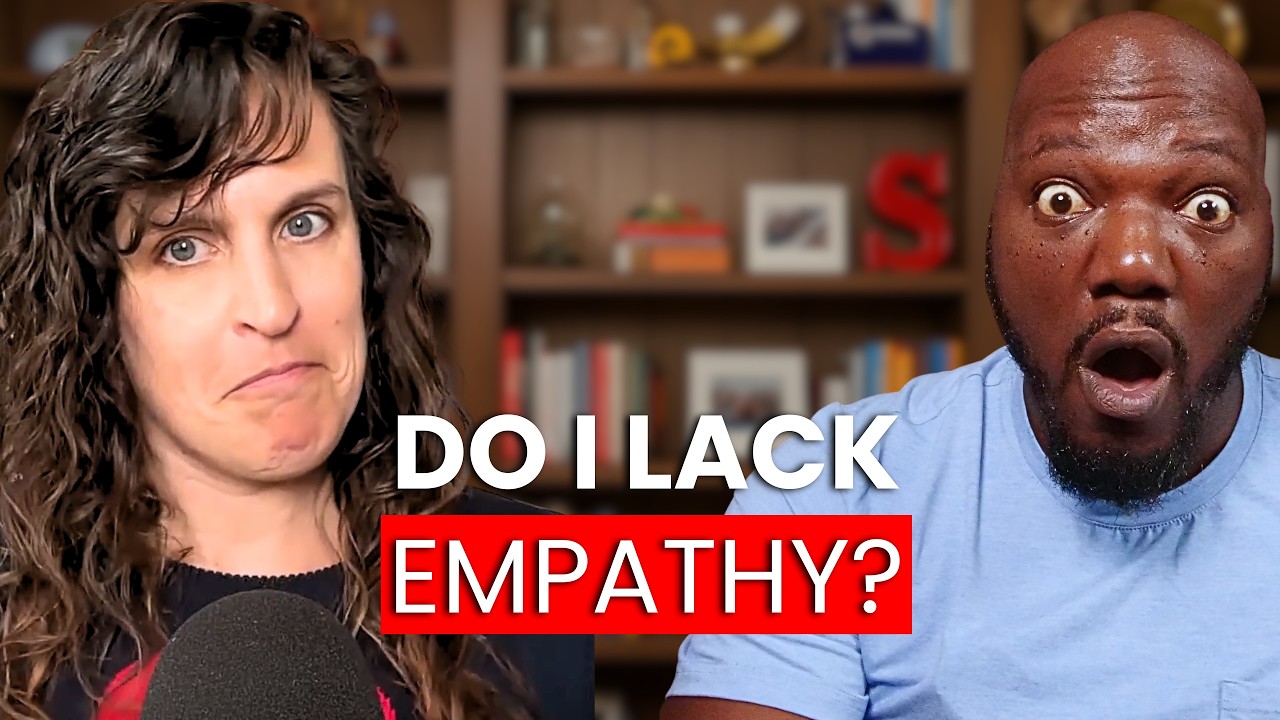
Most leaders don’t avoid empathy because they don’t care.They avoid it because they were never taught how to handle it.In this episode of Leading Through Growth, Tony sits down with Workplace Empathy Expert Liesel Mertes to unpack what empathy actually looks like in leadership—and why so many well-intentioned leaders miss the mark.In this episode, we explore:- Why empathy in leadership is about emotion, not shared experience- The common patterns executive leaders fall into (like “fixing” instead of seeing)- How your own empathy patterns show up under pressure- What to say—and what not to say—when people are struggling at work or in your personal life- Simple, practical ways to build empathy as a leadership skillThis isn’t about empathy as a soft skill. It’s about becoming more effective in how you lead people.
WEBVTT
1
00:00:00.031 --> 00:00:18.003
I think that when we think about business skills, it looks a lot like this, like this conquering of the mountain, growth, big, hard skills. And then I think when people think about empathy, they see this. When you think about empathy, is this what you see?
2
00:00:18.155 --> 00:00:47.821
empathy is not about identifying with a shared experience with someone else, but it's about identifying with the emotions that underpin that experience. I like introducing people to this concept that I've developed, the empathy avatar. When business leaders say like, I just don't really know, of course you don't. Your family of origin probably just had their way of doing things or ignored it entirely. And your professional development did not emphasize it. I need you to settle a debate in my household.
3
00:00:47.821 --> 00:00:56.242
Liesl, do I lack empathy? It's hard, and I'm going to give you two practical tips.
4
00:00:56.731 --> 00:01:26.718
This is going to be a phenomenal episode of Leading Through Growth. The voice that you just heard is workplace empathy consultant and expert, Liso Mertes. Liso is a great friend of mine. And you'll see throughout this episode, it's just like two consultants slash friends talking about the experiences that we have working with leaders at growing companies. And also talking about the impact empathy can have not only on you as a person, on your team, but also on your company. Because I really believe it's a business strength.
5
00:01:26.718 --> 00:01:49.482
We talked for what felt like hours and we could have gone for hours more. So this episode is going to be a little longer than what you're used to. But I think it's jam packed with value about how we can all improve how we show up as it relates to empathy. So enjoy this episode. And I hope to hear your thoughts. I brought props for the first time. Yeah, I want to see it.
6
00:01:49.482 --> 00:02:18.001
I think that when we think about business skills, it looks a lot like this, right? Like this conquering of the mountain, growth, big, hard skills, like charging. That's how we look at business. And then I think when people think about empathy, they see this. Oh, it's so squishy. Yeah. Cute, squishy. And so my question to you, like...
7
00:02:18.608 --> 00:02:27.029
when you think about empathy, is this what you see? Maybe not exactly Kirby, but is this, is this what you see?
8
00:02:28.700 --> 00:02:51.953
I want to give a good working definition in a second to contrast what people often see as, if you hold up Kirby again, squishy and amorphous. But let's go back to that buffalo for a second, because I just want to riff on the visual before I give the definition. So Tony's holding this buffalo. Now you think like the buffalo is pretty impregnable. It's a sign of
9
00:02:51.953 --> 00:03:09.976
North American strength, but also, I mean, even buffaloes face really challenging conditions. You know, they live on the Great Plains. There are huge storms that rip through. And the buffalo's coping mechanism in those storms is to gather together, head down,
10
00:03:10.162 --> 00:03:29.753
with the herd and the group, they withstand it together, benefiting from one another's, you know, collective warmth and strength. And, um, even the seemingly strongest among us in the, in the evolutionary like survival sense knows that they don't live on their own. They live and benefit
11
00:03:30.158 --> 00:03:57.496
from the care and protection of others. And at a certain level, humans are still highly evolved, herd animals. This will get to the definition of empathy, but I love the story from Margaret Mead. She's an anthropologist. And someone once asked her, what was the first sign from just the background of anthropology of human civilization? Is it an iron tool or is it the
12
00:03:58.407 --> 00:04:26.318
She named the location skeletal remains with a healed femur bone. And she went on to extrapolate. If you break your femur, that's a pretty serious injury. And especially way back in the day, that means that you are not able to get your own food or your own water. Like you are laid up in a lot of pain. And that meant that whatever size of community, someone was coming to care for them.
13
00:04:26.707 --> 00:04:34.115
And she linked that really profoundly, that civilization for humans was this capacity to
14
00:04:35.161 --> 00:05:03.933
to care, to belong to one another. A working definition of empathy, though, to get back to your original question, I really like the working definition from Dr. Brené Brown. I feel like it's the most useful. She talks about how empathy is not about identifying with a shared experience with someone else, but it's about identifying with the emotions that underpin that experience. Because so many times when it comes to empathy, people get stuck and they're like,
15
00:05:03.933 --> 00:05:30.730
I've never been through a divorce and Jack's going through a divorce and I don't know what to do and I don't know what to say and I don't want to mess it up. So I'm just going to talk with him about the report that's due on Friday. That is so good. There's a couple of things that I love about that. I read something the other day that said some of the most important organs in our body to survive. Of course, you need your brain, lungs, that kind of stuff. The thighs are,
16
00:05:30.950 --> 00:05:35.776
were like really, really important. And especially in,
17
00:05:36.367 --> 00:06:05.206
ancient civilization, like when they looked at people that lived longer, they had healthier thighs. And the theory was that they would have to walk to go see their friends and walk and go be in community. And there was a lot of walking to get to wherever you needed to go. And that friendship, that connection that they would have and the more that they desired it, the more that they walked. And, you know, there's all kind of studies between life expectancy and leg strength. Right. A part of it is as you get older, like being able to survive a fall.
18
00:06:05.206 --> 00:06:34.585
Your legs are strong. You won't fall as much. Right. But there was this also this communal herd kind of mentality that tied into that, that I think really interesting how you laid that out and work that you do. The other thing that I think is interesting and I'm like tapping into my millennial knowledge here. So I might forgive me if I don't have all of the details, but Kirby, if I remember correctly, like a part of his superpowers was being able to assume the power of whoever was opposing him.
19
00:06:34.585 --> 00:06:43.023
I could be able to literally step into whatever power they had and then be able to utilize that power. So when we think about your working definition of empathy,
20
00:06:43.512 --> 00:07:13.229
it's kind of both, right? Like it's a little bit of both. It's like being able to step into that other person's experience and see it from that perspective, even if you don't have the exact dotted line of like, oh, you've been divorced, I've been divorced, or that kind of thing. But on the emotional level, you get to step into those things, which I think is really, really cool. Can I jump in just for a second? Yeah, yeah, yeah, go for it. Sometimes people are like, empathy has no place in the work environment.
21
00:07:13.516 --> 00:07:39.622
Like there are people that feel that very strongly and they forget that there is actually a very finely articulated, attuned area of it's down to a science of empathy in the workplace. And that's marketing. Marketing, you have some of the highest paid organizational people. At the top, I went to a top marketing school at the Kelly School. And I can't tell you we did...
22
00:07:39.622 --> 00:08:07.077
All kinds of intricate, you know, case studies about how you market the newest green mint SKU of Colgate toothpaste to a particular locality of a Chinese market. Like they are zeroing way in on the customer experience. And how does this land and how does it evoke memories of all kinds of things? Like it's not apart from business. You just haven't turned that sort of granular attentive lens to your first customer. Right.
23
00:08:07.077 --> 00:08:30.297
which is your employee, as I oftentimes talk about it, or in some organizations, like the person that they serve at the end of the delivery chain. Like what, what is the patient experience in that room? What is the feeling of someone who walks out of your mortgage office with that? And, um, yeah, it's already in business. Are you just applying it more widely?
24
00:08:31.259 --> 00:08:53.618
That's an excellent perspective. And I think we probably all at some level have an experience with this. My wife, whom you know, Michelle, is a dancer. She just loves to dance. And so she's been looking for a dance studio that she can go to that's not like a big sweaty Zumba class, but also not like I'm preparing for some grand dance. Like, I just want to dance. I want to turn to some music and have some fun.
25
00:08:53.618 --> 00:09:09.143
And so she was going looking at studios. She found one online and she's like, I'm going to this place today. And I'm like, what happened? She called me and she said, like, they get me. It's almost like they were reading my mind. Every line that I read, I'm like, that's me.
26
00:09:09.143 --> 00:09:27.082
And it generated this connection with a place that she's never even been to or seen or heard of before that moment. And so if we translate that into the business world from a leadership perspective or even taking care of our team members, it's like these are people that you spend time with every day.
27
00:09:27.082 --> 00:09:43.383
How do we create that same connection moment? And not even necessarily when things go bad. Like I want to talk to you about that, too, because I think that one of my biggest fears is like putting my foot in my mouth. And when I want to be empathetic with someone. So we'll talk about that in a second. But.
28
00:09:43.383 --> 00:10:09.995
How do we create that same connection piece where people feel like they belong and that they're valued and they have a friend at work? All the studies, whether it's the Gallup Q12 or whatever you want to look at, show that people perform better and stay longer if they feel connected to the people they work with. And a large part of that is due to empathy. We can't do it without having empathy for other people. Okay.
29
00:10:09.995 --> 00:10:39.391
I need you to settle a debate in my household. And you're the perfect person to do this because of your expertise and because of you. Like, you know me. Like, you know me. You know me. I'm trying to figure out the non-biased way to ask you this question. Okay. Liesel, do I lack empathy? I'll expound. Mm-hmm.
30
00:10:42.496 --> 00:11:05.632
When something happens, you know, someone struggling with something or, you know, something bad happens. My initial thought process may not always be my reaction. My initial thought process is to find the fastest, most effective way to help that person. Mm-hmm.
31
00:11:06.323 --> 00:11:28.987
So if a friend calls me and they say, like, dude, I just lost my arm, I'd be like, man, that sucks. Can I carry something for you? Yeah. Is that me showing up with a lack of empathy? Well, let me let me step back.
32
00:11:29.307 --> 00:11:57.472
more globally and identify and reflect. I think that there are some places where it's easier or more natural to show empathy than others. Like I get to experience you in a workplace or peer settings. Nobody's been yelling at you about their breakfast not being ready five minutes before or leaving their shoes.
33
00:11:57.927 --> 00:12:18.329
Um, I, I, this is part of how I teach empathy to businesses too. Like there's a way in which when, when you practiced in that and helping people, like it's not only being genuinely human in the best of ways, it actually is, is good for your, your peer network and your relationships. Like there's, there's a good overflow. And so for self-aware people, like, um,
34
00:12:18.329 --> 00:12:36.622
I teach empathy. You help teach leadership. You're going to show up caring. You're going to show up available. I'm sure if my children were totally candid and you were just asking in the context of my household, I don't knock it out of the park consistently with empathy. I fall into empathy.
35
00:12:37.077 --> 00:12:56.095
all of these avatar traps because there are so many moments and they oftentimes get me when I am tired, overwhelmed, just wanting to sit, you know, all, all of the emotions. Um, they, sometimes my children work my events too. So they've got the language in their pocket. Like I could think of a
36
00:12:56.568 --> 00:13:18.927
Oh, within the last six months where Ada, who's my oldest, was like, mom, you're doing that commiserating thing. And that's not what I need right now. Like, I don't want to hear. Like, you're right. You're right. So, but foundationally, just jumping to solutions. Full disclosure, I too could be a fix it, Frank. Frank.
37
00:13:19.923 --> 00:13:38.485
Because I feel like I have so many good ideas that would be so helpful. And why don't you want to hear them right now? Exactly. Yeah. A watershed moment for me before I ever even thought of workplace empathy as a discipline came when I was 19. And I was home visiting –
38
00:13:38.873 --> 00:14:05.232
my parents from college. It's that dangerous age where you know something, but there's a lot you don't know. But my mom was sharing with me about, she was on this board for a school that was imploding. It was falling. And she's telling me, this thing and that thing. And I'm listening with my problem-solving hat on, which is, I feel like that's a strength of mine. I live there a
39
00:14:05.553 --> 00:14:28.773
And I like go right into it. Well, like, I don't know, like this dynamic. Did you think about that? And maybe if you would have said, you know, offering what I feel like are really good, helpful suggestions. And I look over and she's just crying. She's crying and she's not even talking to me the rest of the way home. And I'm enough of a learner in my own experience that she like leaves the car. And I sat there and I was like, hmm.
40
00:14:29.735 --> 00:14:53.765
That went very badly. I don't think she heard any of my good suggestions. And it was like if you had that cartoon light bulb that goes on above your head, I was like, I care, but I don't think she knew that I cared because I didn't have any words that made it sound like I cared. And I was like, next time before I tell my ideas, I'm going to be honest.
41
00:14:53.765 --> 00:15:19.347
I'm going to say something like, that sounds hard. Or that sounds like you tried a lot of different things and it was super frustrating. Or I bet that was just the worst feeling when you walked out and they'd passed all those things that you knew weren't good. And I was like, if she knows that I care, then she'll be able to hear what I have to say. And so for what it's worth, there might be some other fix it, Franks.
42
00:15:20.562 --> 00:15:46.972
You need to zero in on the emotion first because especially when people are emotionally dysregulated, number one, they are looking to be seen and acknowledged before they are looking to be fixed. So don't skip that step. Even if you just want them to hear your good suggestions, it's going to poise them to be a lot more receptive if you do that step. So that's a long answer. I don't know if this settled the debate. No, you settled it. I knew you were right before I asked you, but…
43
00:15:47.225 --> 00:16:15.980
I kind of had the answer in my back pocket. Tony's great and he should have the last serving of ice cream too. But no, I think that part is very, it's necessary, right? It's the same thing when we talk about change management. There is an emotional component to change that if we don't address, people are not going to hear the logical part. Their emotions are too loud. And so they can't zero in on the logical part of that change. And I think that,
44
00:16:15.980 --> 00:16:37.495
Same thing with any emotion. Right. We have to feel with people before we try to help solve things for people or solve things with people. So that's really, really good. When something really bad happens, tragic, someone dies, someone has a heart attack, someone is going through a really bad situation and you want to say something to them.
45
00:16:38.592 --> 00:16:51.721
but you're not really sure what to say. And you don't want to say the wrong thing. Like one of my least favorites is like, well, that person's in a better place now, or, you know, they, they don't have anything to worry about anymore. And I'm like,
46
00:16:52.430 --> 00:17:18.232
You don't know that. And that doesn't help me with what I'm going through right now. And sometimes those things can come off potentially insensitive and we never want to be that. And so I find myself sometimes in those moments, like maybe not saying anything at all or wanting to reach out and not sure what to say or just saying something really vague, like, oh, Lisa, I'm so sorry to hear that. I love you. Let me know if there's anything I can do for you. And it's like,
47
00:17:18.417 --> 00:17:28.542
So tell me, what do you think about that? What would you coach someone through if they're struggling with? How do I show up in the hard moments for my friends?
48
00:17:29.133 --> 00:17:54.968
Right. Well, first I would identify with the person. It makes sense that you struggle because we're a grief adverse culture where we can just push what I call disruptive life events to the side and imagine that we're unaffected by them. We don't have the same sort of cultural touchstones around grief or loss. There are all sorts of places throughout the world and over human history where there were elaborate community rituals where,
49
00:17:55.222 --> 00:18:19.100
to honor loss and ground people. Like this is what you do. This is how you show up. And especially in the realm of business, like now I go and I do work with MBA programs, but the origin of my story was having a daughter die. Our daughter, Mercy Joan, just eight days old while I was in my MBA program, which is a great program. Kelly's a great school. Um, um,
50
00:18:20.332 --> 00:18:49.306
We didn't spend any time over two years, over a single class session, not five minutes in a single one, talking about how you support people in the midst of their disruptive life events or in the midst of your own. And so when business leaders say like, I just don't really know, of course you don't. Your family of origin probably just had their way of doing things or ignored it entirely and your professional development did not emphasize it. So that's the reason I have a business and I can do what I do.
51
00:18:49.306 --> 00:19:17.302
And one of my favorite ways to introduce people to how to do it better requires some self-assessment because we all have different ways in which we miss people. And instead of having that be like a detached or a diagnostic sort of conceptual framework, I like introducing people to this concept that I've developed, the empathy avatars. It gives people a little bit of perspective and identification and
52
00:19:17.437 --> 00:19:45.837
but also a little bit of psychological distance where it's not so much like Tony always freeze in those moments and don't know what to say. Be like, Oh, Tony, that's, that's a silent Sam or silent Samantha sort of energy that you're inhabiting that sense of freezing and like, Oh, I don't want to mess it up. And for them, for that, you know, avatar, one of the growth paths is just something that's better than nothing. It doesn't have to be,
53
00:19:46.141 --> 00:20:10.390
you know, profound or earth shattering, like that stings. I'm so sorry. Like, it's sad. Like, I'm sorry that you're going through that right now. That is better than silence. Like people want baseline to be acknowledged. And if you really don't know what to say, say, I'm not even sure what to say right now, but I appreciate that you told me, or I care.
54
00:20:11.318 --> 00:20:37.272
You mentioned just in the setup, a couple of other different avatars. There's the cheer up Cheryl. Sometimes I call it cheer up Charlie. These are not gender specific. The names were only chosen for alliteration, but they traffic in at least, well, at least they didn't suffer or in cliches. Exactly what you said. God needed another angel. Did he? What does that say about God?
55
00:20:37.272 --> 00:21:02.483
And again, for those types, avoid cliches. If you've heard it a million times, it probably is not that helpful. Don't say at least. After Mercy died, people would be like, at least you still have Ada and Magnus, who are my two living children. And I was like, true, does not make me feel better. And again, just don't be scared of acknowledgement.
56
00:21:02.483 --> 00:21:30.547
that I will, two, I'll give you two more that I see commonly. There are nine, um, the fix it Frank, where it's like, okay, well, we just have to like, what can we do? What can we do to help snap you out of this? Like, what's the, you should try this. You should try that. They're so action biased. And lots of times these people become executives or top leaders. Cause we love rewarding people who get the job done. Um, instead of jumping right to solutions, um,
57
00:21:31.019 --> 00:21:52.298
just being able to listen a little bit more. And this is a tool that I teach, just emotional mirroring. Do they sound angry? That sounds infuriating. Do they sound sad? That sounds sad. And you can ask, do you want me just to listen or do you want me to troubleshoot right now? That helps give you a clear line. And maybe they want you to listen for a little bit and then troubleshoot.
58
00:21:53.058 --> 00:22:14.219
Final one, commiserating Candice, that is really top of mind for people. You jump right in with your own story. Like, oh, my auntie, she had to go to Mayo Clinic for breast cancer treatment too. And it was the worst. Like, it was so expensive to stay in that greater mini-up. Before you know it, you've centered yourself. Save your story of connection to the end.
59
00:22:14.219 --> 00:22:38.603
Um, so I, I have other practical tips, like instead of saying, what can I do to help offer something specific because people, it's hard for them to do the mental inventory, but it's all about just letting people see, like we all have current tools in our empathy toolkit. The question is, are those tools serving you? And if they're not just, what are some better practices that you can put in there?
60
00:22:40.038 --> 00:23:06.363
That is so good. That was a long monologue. Let me pause. Really, really good. I was going to tell you, I'm a firm believer that a transformation doesn't happen without awareness. And I think you just raised a lot of people's awareness of like, oh my gosh, I do that. Even in me sitting here, I'm like, I'm guilty of so many of those things. I've definitely done all of those things. And sometimes a combination of those things in the same interaction, which is like not obviously not good.
61
00:23:06.363 --> 00:23:12.050
And me too. And the hopeful thing with awareness building also is like,
62
00:23:12.860 --> 00:23:40.450
it's not too late to start moving in the right direction. You know, sometimes like in sessions, I'll have people end with developing their own aspirational avatar because awareness is helpful, but you need to know like, how do I want to move forward in my own way? Like maybe I want to be listening, Liesl or thing, but I can always like, I can see people's aha. And then I can sometimes see where their crest fallen. Like, oh gee, I did the silent Sam thing. Like, let's say,
63
00:23:40.889 --> 00:24:06.995
We'll talk about remembering important days. Somebody's mom died. You missed Mother's Day. You know that their mom died. Now we're in September. It's not too late. Even though it was in May and you feel stupid and you just want to forget about it, you can be like, you know what, Laura, I realize you did your first Mother's Day without your mom this year. And I was thinking about you. I did not reach out. But...
64
00:24:06.995 --> 00:24:26.789
How are you feeling about her? What are you missing in particular right now? It is very rare that someone's going to be like, yeah, you're such a jerk. You didn't remember me on Mother's Day. They're going to appreciate it. And you're going to be setting different patterns in how you interact with each movement in the right direction.
65
00:24:27.785 --> 00:24:57.772
That's good. I think our brain goes to worst case scenario, right? Like, oh, she's going to hate me if I say that. The part that's going to stick out is that I didn't remember it in September now. But that's usually not the case. The same is true with vulnerability, right? We think that if we are vulnerable with other people, they're going to judge us. But when people are vulnerable with us, we usually don't judge us. It helps us care more. We feel more connected to that person. We trust them more. We are more willing to open up.
66
00:24:57.772 --> 00:25:20.384
I want to give you a hug right now, but in our brain, for whatever reason, it just seems like the worst possible scenario. They'll hate me. No one will ever love me again, and they will know that I messed things up. What's your blink reaction to an executive typing into AI? How do I be more empathetic with my team? That's great. Do it. I love...
67
00:25:20.840 --> 00:25:46.102
that you have an impulse even to ask the question, use whatever tool is there. I think that one of the best things that happens in in-person sessions is there's a vibrational quality of being faced with another person and having that interaction that things fall apart in. Like you'll have all these old habits, you'll get busy. It's hard to go from propositional to practice.
68
00:25:46.102 --> 00:26:07.263
which is where a big part of any training session that I do is giving people space to metabolize the content. How does this show up in your workplace? Okay, let's have a role-playing scenario. Let's think about that. So I do think that lasting behavioral change doesn't usually come from just reading an article. That's a great place to start. Kudos to you for even thinking of it.
69
00:26:08.545 --> 00:26:27.462
Yeah, I think it's I think it's good to get that information. There's something maybe weird or ironic about asking, you know, a robot to teach you how to be more human. I think that like when my head goes to that, it's like, but but as a mechanism for learning and a starting spot, I think that is is pretty cool.
70
00:26:28.103 --> 00:26:48.843
The whole AI proposition is a little bit crazy when you squint at it sideways. Wait a second. Yeah. It's interesting value exchange. Like what are we willing to give up for what we want? And a lot of times when it comes to AI, we give up way more than we even think about or consider because none of us are going to read the terms and conditions. Yeah.
71
00:26:48.843 --> 00:27:18.560
None of us are going to really think about where our data goes beyond what we're using it, but we're giving all of that up for the convenience of being able to get this information really, really quickly. And I'm not saying that it's a bad thing, but it is something to, you know, something to consider. Okay. I got to get you out of here. One last question. Yeah. I'm an executive that's listening to this podcast and I've been really, really struggling lately with how to connect with my team. I am,
72
00:27:19.893 --> 00:27:37.628
A person who cares about people. I love my people, but also I have this pressure, whether it's from private equity or from the board or from, you know, the business itself of just to keep driving and driving and hit numbers and metrics and numbers and metrics and be efficient and do all the things.
73
00:27:37.628 --> 00:28:05.860
what would you speak to that person that's really, really struggling with that? Maybe even to the point of they're beating themselves up about it, but they want to do better. They want to be more empathetic. They're hearing all the benefits you've discussed. What's some parting wisdom that you would give to them? It's hard, and I'm going to give you two practical tips. One, this is the stickiest tool across industries, any group I work with.
74
00:28:06.232 --> 00:28:20.761
I love the stoplight check-in. It's a really basic tool. Use it to kick off your meetings. Ask people to rate the energy that they're bringing through the lens of a stoplight. Red, difficult. Yellow, some things coming in the background. Green, you're here. You're feeling great.
75
00:28:21.436 --> 00:28:50.174
That will give you a nice rough metric. If someone is red or yellow, follow up with them afterwards, like after the meeting. Is there anything we need to talk about? Is there anything that needs to be shifted? If someone is green, celebrate with them. You're having a baby. I'm going to write you a note. Cues up meaningful follow-up, let you know where people are. Also for people who think, you know, like, oh, I don't even know where to start. This is a great low threshold way to introduce more of that life outside of work.
76
00:28:50.174 --> 00:29:19.655
Because you earn the privilege to hear about somebody's disruptive life event. They don't owe that to you. And you build that up in the normal time. So I don't know. I could say something like, I'm yellow. All four of my children have started spring sports. And I feel like I have a part-time job now driving to the cross fields. It's a little stressful. And it creates space. It invites people. So if you're an executive, do these check-ins. Share a little bit about where you're at. This is not leaky sharing. This is not where you process your divorce. This is not where you process your divorce.
77
00:29:19.655 --> 00:29:43.229
Think of something that you're, you know, able to share that can invite space. And you'll be amazed at what that does. You'll be amazed at the information that it builds up. My other tip is plan for care in your calendar. If you know that someone is going through a hard time, they just put their father in memory care, follow up first day and drop in your calendar a note for a week later and a month later.
78
00:29:43.769 --> 00:30:05.892
Check in on Tony who put his dad in memory care. It will keep you honest and you have so many things that you're trying to remember. And it doesn't have to be like, you don't have to send an $80 bouquet of flowers. Although if you want to, that's not a bad gesture. But just, it will help you actualize your intention in a way that matters.
79
00:30:07.580 --> 00:30:29.180
I hope you enjoyed this episode of my friend Liesl. She is such a gift. She is just a wealth of knowledge as it relates to leadership and empathy. I want you to visit her website. It's LieslMurtis.com and book her for your next event. Or maybe you have a conference or something and you want someone to come and really speak to that audience about empathy. She would be the perfect person.
80
00:30:29.180 --> 00:30:52.045
If you enjoyed this episode, make sure you subscribe. And if you're listening to the audio, leave us a review. A review really helps the algorithm push this show up to people to say, hey, this is something that we actually enjoy listening to. If you're watching it on YouTube, make sure that you like and subscribe and share this with a friend. I'm looking forward to seeing you on the next episode of Leading Through Growth. Until next time, see you.