Apple Podcasts
 Spotify
 iHeartRadio
 Amazon Music
  Pandora
 006 - Culture Fuels Growth with Scott Whitaker
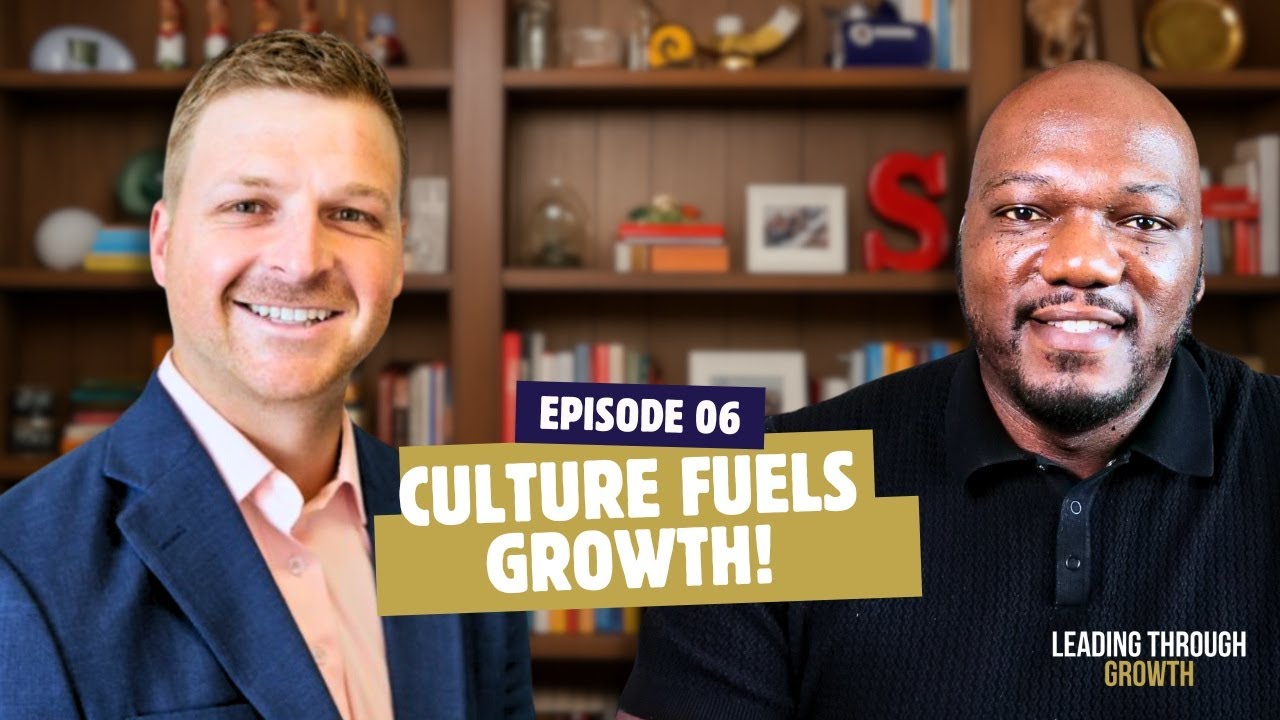
In this episode of Leading Through Growth, Tony Sanders sits down with Scott Whitaker, Director of Human Resources at Ryan Fire Protection, to explore what it really takes to scale a company without losing its culture.
Over the past four years, Ryan has experienced rapid growth—expanding from just under 300 employees to nearly 700. Scott shares what that growth looks like from the inside, and how intentional leadership, shared ownership, and people-first thinking have helped them preserve and strengthen their culture along the way.
They dive into:
- Why culture can’t live in HR alone
- How leadership must scale across the organization
- The challenge of integrating cultures through acquisition
- Why growth breaks companies that aren’t intentional
- And what leaders can do to build a culture that actually scales
If you’re leading a growing team or organization, this conversation offers a grounded, real-world look at how culture fuels sustainable growth.
WEBVTT
1
00:00:00.031 --> 00:00:29.849
Let's say that you are making a hiring decision and you have person A who is really talented, a one to 100 scale as far as culture is concerned. He's a zero, like doesn't care about the culture at all. On the other hand, you have someone who would be like 100 on the culture scale, but they don't have the two years of experience or they don't have the requisite industry knowledge that you would necessarily want someone had. And you could only pick between these two people. Which would you pick? Yeah.
2
00:00:30.254 --> 00:00:55.229
Is culture just another HR buzzword or is it actually fuel for growth? In this episode of Leading Through Growth podcast, that's the question that we're going to answer. And I say we because I get a chance to interview a good friend of mine who also happens to be the director of HR for Ryan Fire Protection. Ryan is a wonderful growing company. And what stands out to me every time I get to interact with them is their culture.
3
00:00:55.229 --> 00:01:22.162
And you'll hear in the episode how culture is not just one person's job. It's not just HR's job. It's everybody's job. But what you'll also hear in this episode is how culture is at the center of every single thing that they do. Scott, my man. So here's what I'm always interesting about and I'm fascinated about with Ryan Fire Protection. I love when I work with companies or see companies where culture shows up when the
4
00:01:22.162 --> 00:01:39.830
culture officers are not in the room necessarily. Usually at a company, especially a fast paced growing company, it's like culture, that's HR's job or that's their job over there. And everybody else, like when they try to lose room, we're going to do our own thing. But I've seen enough evidence from Ryan Fire Protection of like
5
00:01:39.830 --> 00:01:54.460
culture is always in the room regardless of how, if HR is present or not, which I really do enjoy. And so just talk to me about like Ryan fire protections, culture, you know, why it's important to you guys, why you prioritize it. Yeah, yeah, absolutely.
6
00:01:54.933 --> 00:02:15.959
We were founded in 1989. Right. So we've got 35 plus years of, you know, of runway here of establishing this culture. And, you know, to credit of the Ryan Fire Protection Organization, it's been it's been owned and operated by the Ryan family for that entire 35 plus years. Right. So it really started with Dick and Marilyn Ryan back on the founding of.
7
00:02:16.448 --> 00:02:45.440
hey, we're gonna be a family organization, we're gonna do things a little bit differently, right? And we're gonna hire good people, we're gonna treat them fairly, genuinely, and we're gonna continue to build on that throughout the entirety of this operation. Now, I don't think that when this was founded in 1989, they would guess that it'd be across four, five, six states where we're at right now, right? And 700 plus employees and more to come. But that foundation of treat people fairly, be genuine, right, empower individuals,
8
00:02:45.676 --> 00:03:11.191
That's something that we've really never let go of. And so Dan and Kevin Ryan being our two owners and operators at this point, the two of the sons of Dick and Marilyn, they really leaned into that and they've challenged individuals to feel empowered, build processes that allow individuals to succeed, but give them that empowerment to do their jobs well and to do it in a way where they can be themselves while they do it. And so when I think you have individuals showing up to work that are
9
00:03:11.849 --> 00:03:33.010
being themselves, right? Not to continue to be redundant with the, hey, be genuine, be yourself. But that's really, it's as simple as that here in these hallways, right? Be Scott Whitaker when you come to work and we're gonna hold you to a high standard. And we all have a job to do, especially through this rapid growth, but we don't need you to be somebody or not. We need you to lean into your superpowers
10
00:03:33.280 --> 00:03:55.572
You know, whatever you're best at. And that's going to help the organization succeed. I love hearing stories like that and just hearing you talk about the culture, because in my experience, when I work with growing companies, when they start to grow, especially really fast. And you just talked about some of the growth that you're all experiencing. You get to learn really early about what they believe is very important and what they believe is just like a nice to have.
11
00:03:55.572 --> 00:04:18.185
So some companies, they're like culture, that's a nice to have thing. But what's really important is marketing and sales and delivery. And it sounds like for you all, culture is on that must have list, not the nice to have list. Do you feel like from a business perspective, having that culture gives you an advantage over competitors? I think so. It shows up in...
12
00:04:18.674 --> 00:04:47.750
the work or output, right? It's a non-negotiable here to, to be genuine and treat people with respect, right? And just be yourself as you walk through the door. Like that's a, it's a non-negotiable. Those are people who are looking for, like, do they fit the Ryan culture? But yeah, I think it's a competitive advantage because oftentimes people are choosing Ryan fire protection because of our culture, because of the expertise that we have, not because we're the cheapest option, right? I don't want to speak for sales and say, you know, where we rank and in terms of other organizations, but
13
00:04:48.020 --> 00:05:01.148
I know for a fact we're not always the cheapest option, but I know that we have great relationships with general contractors. I know that we have a great reputation within the industry because of the people that we have and allowing them to flourish and succeed in an environment where
14
00:05:01.486 --> 00:05:30.950
You know, it's not necessarily always about the numbers, right? That's important. But do you like working with your neighbor in the office, right? Can you step out of your office and have great conversations? And that leads to collaboration, that leads to innovation, that leads to cross-functional partnerships, right? Where marketing is comfortable working with HR and operations can collaborate with sales. You don't see a lot of toxic communication throughout the workplace. And again, I think that's all as a result of culture.
15
00:05:31.135 --> 00:05:40.383
Can I sit here and quantify exactly what that means to our revenue every single year? I probably can't, but I do know it's why we've been successful for as long as we have been.
16
00:05:40.754 --> 00:06:02.405
Yeah, that's really seeing your people as a strategic advantage. Like if we invest in our people really well, they'll invest in our customers and it makes this whole thing work. Dan Cathy, the CEO of Chick-fil-A, they asked him, like, how do you get your people to say my pleasure and like deliver this great customer service? He's like, oh, it's easy. We take really good care of them and then they take really good care of our customers.
17
00:06:02.405 --> 00:06:27.903
customers and it all worked. It's like, oh, it really, like you just said, it's kind of as simple as that. Like it's not simple necessarily to execute, but in, when we think about the principles of it, it is really straightforward. There's not a lot of magic there. It is about just being willing to commit and having that as a must have and not a nice to have, not something that just kind of happens. And you can't fake it, right? You can't say, hey, great job. Here's a
18
00:06:27.903 --> 00:06:45.807
Right. Because, you know, that's the that's the classic cliche joke of, like, hey, I hit all the numbers for the year and my team threw me a pizza party. Like I've been part of organizations like that, right, who have been successful in their own right, but maybe have different priorities. Right. And so one of our top priorities is just create a collaborative and.
19
00:06:45.807 --> 00:07:01.906
and welcoming culture. And that's really easy for our turnover and retention numbers speak for themselves right there. People don't want to leave once they're here because we have been so intentional about it. And it starts at the top. It's not a function of HR. It's a function of every single department within the organization.
20
00:07:01.906 --> 00:07:21.852
Yeah, I think what you're what you are describing is a company that's decided that when it comes to culture, it's not a check the box thing. It's not like, oh, we did it. That's what the pizza party feels like to me. Right. Like, oh, we did something to say that we have culture. Right. The swag boxes, which, by the way, I got this nice Ryan Fire Protection bag behind me and stuff.
21
00:07:21.852 --> 00:07:45.393
I got a Rhyme Fire Protection coffee mug that I use. So I'm not anti-swag. I love the swag. I got this for helping out at one of your events, which is great. But people do that stuff and they think that that's going to replace how we actually interact with each other and what's genuine. You keep using that word. And so to me, when companies do that, they're just checking a box or just saying, oh, yeah, we did culture because we bought a ping pong table and we put it in the break room. It's like that.
22
00:07:45.393 --> 00:08:03.179
That is not culture. It can't just be something that you put on your LinkedIn page or on your website or a banner in the walls. It has to be a feeling in the halls. And so I get that feeling every time I'm there, whether it's in person or I'm seeing you at a True You event or going to one of your sales events. I feel like.
23
00:08:03.179 --> 00:08:22.838
that interaction with every individual, whether it's an executive, a director, a manager, or just like somebody that started three months ago and they're just super excited to be there. So kudos to you and the team on that, of just making sure that it's something that's critical and really operationalizing it through the organization and not just checking a box. Yeah.
24
00:08:22.838 --> 00:08:51.222
Now, I will say we do have a ping pong table in our downtown office, but it gets used much more for whenever I'm down there. Right. I see individuals sitting around it. It's like a half ping pong, half table, like legitimate dinner table or lunch table. I rarely see people playing ping pong. But what I do see are individuals from all over the office. Right. They're not, you know, clicky groups. It's not just the operations group or the service department. They're individuals from all across the office sitting there.
25
00:08:51.222 --> 00:09:12.873
having lunch, talking about their days, talking about their families, right? Talking about what they're excited about. And I think we're kind of losing a little bit of that. I don't know if it's post COVID, right? But the days of, you know, hanging out in the break room and have lunch together are slowly being replaced with grab a sandwich and eat it at your desk, right? And that hurts culture too. You know, again, not to say that, you know, people can't do that, but it's refreshing to see
26
00:09:13.295 --> 00:09:24.128
you know, an organization where people are having lunch with each other and just talking about their days, right? And in turn, that means the better working relationships when you've got a good personal relationship. So, yeah, we have a ping pong table, but,
27
00:09:24.500 --> 00:09:54.031
You know, less ping pong balls and more subway sandwiches. Right. That's what we see more of. So it's it's fun. It's it's a it's great to have. I feel like I need a better example because I'll tell you a quick story. I was doing a keynote at an organization and we're in this big room and there's, you know, like things all around. I go up and I'm doing this thing about culture and why it's important. And you can't just buy a ping pong table and think that's going to replace being intentional about your culture. And what I didn't realize that there was a ping pong table in the back.
28
00:09:54.149 --> 00:10:23.832
And so when I saw the looks on some people's faces, I'm like, what are they? They're all looking around and, you know, they're like, we have a ping pong table. And I'm like, crap, I didn't mean it like that. I'm not anti ping pong table. I'm anti checking the box of culture. And I think the ping pong table has become the status symbol of that. I've been around you all know to note enough to know that you're not checking a box with that. Right. Like, it's cool to have the ping pong table if you're also being intentional about your culture. If the ping pong table is the way that you're intentional about your culture, then, you know,
29
00:10:23.832 --> 00:10:50.866
Yeah, that's where we go wrong. It's a great metaphor. It's the pizza party metaphor, right? It's, you know, like I said, you can't fake it. You cannot replace it with something, whether it's tangible or intangible. It's got to be a genuine collaborative environment. Right. And yeah, not out to our talent acquisition team. And we have a pretty robust process that we go through when we're hiring individuals. Right. We they meet with multiple individuals where they go through the predictive index and that's not going to tell us everything.
30
00:10:51.187 --> 00:11:16.634
But we're looking for more than what's on the resume. Right. And, you know, I think that's important to have, you know, hey, do you want to be here? Hey, we hammer out multiple times throughout the interview process. People that work for Ryan are passionate about the industry. You know, we are a life saving industry. Right. We are, you know, we're passionate about that, that what we do is saving businesses, saving lives, saving livelihoods. And that's important work. And so we're passionate about the industry.
31
00:11:16.904 --> 00:11:26.320
And then on the flip side, if you're bought into the industry, you're likely going to be bought into, you know, the environment here as well. And so, you know, like I said, it's more than just.
32
00:11:26.759 --> 00:11:55.413
dotted lines on the resume or bullet points on the resume, right? It's who are you as a person holistically? And that's great to look at too throughout that process. I'm glad you brought up talent acquisition. So here's my experience and I want to know how you deal with this or what your thoughts are on it. As companies grow and you need to fill more positions, I was actually just talking to someone this morning and they're like, yeah, I'm going to go have a meeting and they're going to tell me that we need 50 more positions open because we're just growing that fast. And I'm a little nervous about that.
33
00:11:55.413 --> 00:12:18.835
And the reason they were nervous, and I imagine that you've experienced this in some way, shape or form. The reason they were nervous is because when you're hiring two people at a time or three people at a time, you feel like you can be a little more picky as far as the level of talent that you're bringing in a level person. Right. We want to hire for attitude and train for skill kind of thing. But when you have 50 open positions and I'm making up a number because that's what they gave me. But when you have a bunch of.
34
00:12:18.835 --> 00:12:43.709
open positions and you need people quickly because the demands of the business are pulling on you. How do you still maintain that integrity of your your hiring practices or even your culture by saying like, hey, I know we need people really badly, but we really need the right people. We don't just need anyone. We don't need anybody that can come and just fog up a mirror and that be the hiring test. We need people that are really good quality that we can we can train them. We can teach them, but they're going to fit in here culturally.
35
00:12:43.709 --> 00:13:04.988
Yeah, well, you know, I'll take your 50 and use 20 because that's a conversation I just recently had in our engineering group. You know, we could use 20 engineers tomorrow, right, if we snapped our fingers. But we know just bringing in 20 individuals that don't fit our culture, that don't fit the role right to be cliche, aren't the right people for that right seat. Right. If we just do that, we're going to cause bigger issues for ourselves.
36
00:13:04.988 --> 00:13:28.343
So it might slow down our ability to scale and take on more complex operations, but we're going to lose ourselves if we start to do that. And that's not just an internal loss. That's going to be felt by our customers and the great contractors that we work with. And so if we start to do that, people start to question who Ryan is. So we know we've got to we've got it and we're not perfect. We've got to navigate the frustrations internally of,
37
00:13:28.951 --> 00:13:57.368
man, I'm working longer hours than I want to, right? Or this person's, you know, not pulling up, you know, their end of the bargain, right? Or not holding up their end of the bargain. Like those conversations happen, right? And I think that's natural within any organization. But the answer is always, all right, we're going to find a way to, you know, allow your workload to be managed, you know, effectively or properly, right? But at the same time, we all kind of need to just be patient and know that, hey, if we don't bring in the right person, all we're doing is making the problem bigger than it needs to be.
38
00:13:57.368 --> 00:14:13.298
You know, and yeah, we're, you know, from an executive level, maybe, you know, that means slowing down our ability to scale. And then at an operational level, that might mean harder conversations that HR maybe needs to be a part of or coaching our managers on helping their team understand why this is going on.
39
00:14:13.298 --> 00:14:29.009
but we have to stay true to ourselves, right? I'll give a perfect example. Now the listeners might not love this one, but if you're a Purdue fan, you probably know the history of Matt Painter and kind of his trajectory of his team. So back in 2007,
40
00:14:29.279 --> 00:14:57.612
They call it the baby boilers. It was Robbie Hummel, Juwan Johnson, Etuan Moore. Those guys came in and kind of were like the start of Matt Painter's tenure at Purdue. Well, he quickly started chasing the stars, right? The four stars, the five stars. I don't think he landed too many five stars, but the four stars, right? He was looking for the flashy individuals. Purdue didn't win any games. I was there in 2000, I think it was 2013, we were last place in the Big 10, right? And so he quickly realized,
41
00:14:57.983 --> 00:15:26.975
I'm going after the resumes, right? Like I talked about the bullet points on the resumes, but I'm not looking at this holistically. Completely changed the way that, you know, he went about hiring or recruiting. And now all of a sudden produce, you know, top three, top five in the big 10 seemingly every year, winning big 10 championships, maybe get to a final four. And so that's transferable to business. And the fact that, yeah, we might need some people right now, right? But as soon as we start chasing the wrong people or getting somebody in just because they're a warm body, you're gonna lose,
42
00:15:27.278 --> 00:15:51.578
who you are as an organization. That's a dangerous game to play. I agree. And I love that you brought up a Purdue reference, even though it wasn't necessarily the greatest. I grew up a big Purdue fan. I went to basketball camps with Coach Katie all the way back in the day, and Mackie and all that stuff. So I love that. So in line with that, let's say that you are making a hiring decision and you have person A,
43
00:15:51.578 --> 00:16:20.215
who is really talented, really experienced from a technical expertise, been in the industry for years, but on a one to 100 scale, as far as culture is concerned, he's a zero, like doesn't care about the culture at all. On the other hand, you have someone who would be like 100 on the culture scale, but they don't have the two years of experience or they don't have the requisite industry knowledge that you would necessarily want someone had. And you could only pick between these two people.
44
00:16:20.215 --> 00:16:44.380
which would you pick? Person A, tons of industry experience, zero culture, or person B, not a lot of industry experience, but 100% on culture? Well, hopefully there's an option C, right? And those are the ones we're really looking for. Those are the individuals we're really looking for. But if I'm only giving A or B, we're going for B every time, right? But when you choose B, you need to make sure that you have a very robust training program.
45
00:16:44.380 --> 00:17:10.435
Right. And we have that in some parts of our business. We're confident that we can get you there. But if you want to be here, if you want to walk into the doors of Ryan Fire Protection every day, we want you. Right. We want you working here and we can get you where you need to be. But we've found that some individuals with a lot of experience. Right. It's sometimes harder, you know, to to train or Ryan eyes, as we call it here, right, where they might be stuck in their old ways. They're just here to collect a paycheck and they're not helping push our culture forward.
46
00:17:11.009 --> 00:17:25.792
Right. And so then we have to have tougher conversations of, hey, you're doing a pretty solid job, but it doesn't seem like, you know, you're really helping push our team forward or organization or, you know, you're not collaborative. Right. And those conversations get really tricky. But if you want to be here.
47
00:17:26.062 --> 00:17:53.332
you're going to succeed. Simple as that, right? We will make sure that you succeed. Love it. Love it. What attracted you to work at Ryanfire? I look at your LinkedIn and I see your history, your career trajectory, but what attracted you specifically to come work at Ryan? So I was really trying to find my way in the human resources space. That was kind of where I was at in my career at the time. So I graduated with a management degree, supply chain technology minor. My dad did
48
00:17:53.618 --> 00:18:15.252
35 years in warehousing logistics. And so I kind of thought that would be my path as well. And just find the biggest organization I can find and climb the ladder. Right. Got about six years into that and realized not necessarily that it wasn't for me, but that navigating or climbing that ladder was going to be a little bit trickier and might, might, you know, require me to relocate to different states. Right. To be able to get up that ladder. Right.
49
00:18:15.623 --> 00:18:39.232
And that wasn't something I wanted to do at the time. I wanted to stay in Indy. After I went back to school and got my master's in human resources and kind of changed the trajectory of my career, I landed at another organization that was a big change in culture from PepsiCo, where I started to NTN, which was my second stop. A lot of really, really smart individuals, probably the best HR leader that I've ever worked with was my direct manager.
50
00:18:39.518 --> 00:19:08.358
A lot of positives there, but this job came up just through friends. I said, Hey, Ryan's got a great reputation. It's a great organization. I really think you should pursue this role. I had been with the other organization less than a year. I didn't want to be seen as a job hopper, right? I wanted to continue to learn from this HR manager that I had at the time. It was a really tough decision, but I walked in the doors here at Ryan and I could feel the culture immediately, right? It was just, it didn't feel corporate-y, right? I was meeting with the CEO and
51
00:19:08.695 --> 00:19:38.277
and the president of the organization right off the bat. Now the role was to report to the CEO, right? So, so kind of obvious, but at the same time, you know, him being in the lobby and welcoming and wanting to have these genuine conversations, I left that, you know, that interview thinking, okay, this would be great. I, you know, I want to keep my interview skills sharp and want to, you know, meet with them and just see what's going on over there. I left that, called my wife. I'm like, I need this job, right? I need, I need to get into Ryan fire protection. They're, they're doing something right over there. And so what attracted me was just the,
52
00:19:38.767 --> 00:19:54.308
to keep saying it, it was just a genuine feel. It's just a genuine operation over here where I could tell people are passionate. People are working hard. They love, you know, having, you know, the Ryan fire protection logo, you know, on their chest, if they're, you know, wearing a company sponsored Polo, right? Like they're really proud of that.
53
00:19:54.612 --> 00:20:10.238
And I could feel that. And I wanted to get in pretty badly. So I was pretty grateful that it all worked out. That's great. I love the intention behind everything that you're saying and as it relates to culture, even the CEO, like being out there very, very much could have.
54
00:20:10.238 --> 00:20:32.767
had the EA go out and get you and bring you back and been in a meeting and I'm wrapping up. I got an interview, got to run that kind of thing. I've experienced that. But the fact that the CEO was willing to be there, greet you, welcome you. I think that is good. Do you think that when it comes to culture, the way that I see it at least is as a company, we're going to set an intention to.
55
00:20:33.205 --> 00:20:44.123
with principles and guidelines for how we should interact with each other, how we should interact with our customers, how we should interact with our community, how we should interact with our colleagues. We're going to set that intention. Mm-hmm.
56
00:20:44.410 --> 00:21:10.583
With that being said, we may not hit the mark every time, but if we have those intentions and we're clear about our intentions, I think that still provides a great experience for everyone who experiences the culture because they know what the target is. So even if we miss it a little bit, I think people still give us grace. I just want to know your thoughts on that, just being intentional about your culture and communicating that intention, even if you miss the mark sometimes.
57
00:21:10.583 --> 00:21:40.182
Yeah, that's a tricky one, right? Because there's no way to be perfect with it. But I think what it really boils down to is if you hear of something going on within the organization, that's not our culture. It's not a, okay, I'm calling HR and this person needs to be put on a PIP, right? Or I'm calling HR and they need to be called into Scott's office right away and we need to have a conversation. It's not that, right? It's not a tattletale culture. It's not a culture of thread or write-ups or PIPs, right?
58
00:21:40.570 --> 00:22:04.347
We'd like to avoid those as much as we can. And so really, when somebody's missing the mark or we're missing the mark as an organization, it's just a conversation. Hey, you know, this is the way it was handled. I think we should probably rethink that. Or, hey, in the future, you know, let's talk about this a little bit differently. Or, hey, we used to partner with this organization. We did a lot of great work with them. What happened there? Do I have the, you know, the go-ahead?
59
00:22:04.634 --> 00:22:32.377
to either partner, re-engage with that organization, right? Whether it's a charity or, you know, whatever it may be, a nonprofit, do we have the bandwidth and the capacity to re-engage with them? Or can we explore something adjacent, right? Why are we not doing that? And so people see that, you know, you go on our LinkedIn and see, you know, over the last couple of weeks, all the great things we've been doing with the planting trees with Keep Indianapolis Beautiful and so on and so forth. And so I think, again, we've just empowered individuals to feel like it's not a culture of,
60
00:22:32.866 --> 00:22:57.554
tag in HR and they need to have this conversation, or I don't know how we get involved with, you know, this organization or this nonprofit, you know, it needs to start with HR. It's like, no, everybody knows that, you know, from the minute they're onboarded, this is what we do. You know, we've got, you know, a commitment to external community. That's everybody's job. So again, it's just, you got to keep talking about it. And it's not one owner. It's everybody knowing that if you're passionate about this,
61
00:22:58.027 --> 00:23:22.883
We'll support you and we'll try to make it work. I love that. And even kind of safeguarding the culture, too, when you see those things that are happening that are not in line with the culture, making sure that we handle it in some way, shape or form, I think is really, really important. Here's something that I'm curious about. We are both fans of True You. We work with them in different capacities, of course, but really love our good friends over at True You, a local culture community that we're a part of.
62
00:23:22.883 --> 00:23:50.744
When I go to those Shuyu events where I'm the speaker or not, and they show the leaderboard at the end, and I see Ryan Fire Protection at the top, it makes me smile. It also makes me question how you guys are doing this. Because this is what I know. At a growing company, it's not like people are sitting around on their hands waiting on stuff to do. People are busy. And one of the most common complaints that I hear is, Tony, we're just too busy to do training. We're too busy to invest in our people, which is just like...
63
00:23:50.744 --> 00:24:18.740
I could go for hours on that. It's mind blowing. It's like, it's like telling your teenager, I want you to drive, but I'm too busy to teach you. It's like that's not, that's not a real thing. But my question is, how do you get that much participation when you guys are growing as fast as you are and everybody's so busy? So it started with one comment that I won't forget because I thought it was impossible at the time. I thought that I was going to be out of a job in six months because I was being asked to do the absolute impossible, but Dan Ryan, our CEO, in one of the meetings, I said, I
64
00:24:18.740 --> 00:24:36.492
He might remember saying this. He might not. But he said, Scott, when I walk around this office building or any of our offices, I want to hear the words true you be spoken by individuals. I want to hear people talking about the leadership academies. I want to hear it in indirect conversations when I'm just walking by.
65
00:24:37.100 --> 00:25:04.994
And I'm thinking there is no way I can accomplish that. Right. People are talking about Purdue basketball. I'm going to keep bringing them up. Right. For all the Hoosier fans. Listen, we were talking about the game last night. People are talking about, you know, how, you know, they need to go mow the lawn afterwards. They're talking about, you know, a customer that that's been unruly. Nobody's talking about leadership development. Right. Right. Wrong or indifferent. I just I don't think it's a conversation that happens a whole lot, at least naturally. But I heard that. I'm like, OK, he means business. Right. If we partner with TruU, we are going to truly.
66
00:25:05.467 --> 00:25:28.484
partner with them. So this needs to be like one of the top two or three items on my priority list as the HR director here. And so I started to think about how I can make this happen. And it wasn't going to be me knocking on office doors or popping in saying, Hey, have you seen the latest event coming up? Right? No, it's going to take everybody. So the first thing that we did was we created some excitement around the leadership development courses.
67
00:25:28.670 --> 00:25:55.889
There's a nomination process. You can nominate yourself. You can nominate a peer. You nominate a manager or a manager can nominate a direct report. Right. So that automatically drummed up some excitement of, oh, I'm being chosen for this. Right. Once you are chosen, there's a long list of individuals that have been nominated. Now it's myself, Dan and Kevin Ryan looking through these this list and saying, who's somebody that's going to be a leader in an organization or who is already leading? Right. Who's somebody doing really well? It's not a fix it program. It's an enhancement program.
68
00:25:56.277 --> 00:26:15.734
Once they're chosen, then after those conversations, the conversation with the individual turns to, hey, you're doing an awesome job in your role. We want to give you additional tools in your tool belt to continue to succeed. Right. So now you've turned this leadership development course from a I don't know what this is. I don't have time to, you know, to give up every other week for 12 weeks. Right. I can't do that, too.
69
00:26:15.903 --> 00:26:30.955
No, I want to be chosen. I'll do everything I can to make sure that I'm blocking off my calendar for that day. So that was the big one. And then with the events, which we really, really lean into, you know, it's becoming a little bit more virtual than in person. We really want to focus on the in person again. But that's taken...
70
00:26:31.057 --> 00:26:56.403
everybody, right? So we have quarterly calls with everybody who's gone through the courses and really, you know, leaned into make sure you're talking about it and you're explaining your teams, hey, this would be a great event for you to attend. We got a great thought partner and Tony Sanders, right? Presenting. I know Tony personally, he'd never, you know, he'll never steer you wrong. Like, you know, we'll talk about that and our experiences with it. And then I think the third thing is leaning in with our marketing group. We've been really intentional about building up our marketing group here at Ryan.
71
00:26:56.757 --> 00:27:16.990
more so for the internal reasons rather than external. They're doing a great job externally, but they're doing a great job communicating across the organization. And we just keep sending out reminders or, hey, here's a great event coming up, staying really intentional about how often we talk about it. After doing that for about a year, it just kind of took off on its own.
72
00:27:17.277 --> 00:27:34.270
You know, people know about it. You know, we talk about during onboarding and I don't have to do a whole lot at this point. Right. It's, you know, we've got, you know, I'll get a list from Jennifer Coldiron over at TrueView. Hey, you had 30 people at this last event. Great. I wasn't there. I didn't even know that was happening, but 30 people showed up. Right. It's just part of our culture at this point.
73
00:27:34.270 --> 00:27:54.335
Yeah, I love everything that you said about that. I think that you've done a couple of things. One, it started at the top, right? It started with the owner saying that this is important to us and here's how we want it to show up, which I know scared the crap out of you, but also probably motivated you to start thinking about this differently and saying, okay,
74
00:27:54.335 --> 00:28:23.933
If this is going to be a priority and this is what success looks like, then that's going to change what I need to do. Right. And so you start to do that. Then you made it a part of the cool kids club. Right. You everyone wants to be where everyone wants to be. If people can say like, wow, I got chosen to this, man, I feel like I'm a part of the cool kids club. Everybody else is going to say, OK, what do I need to do to get chosen next time? Which has a sense of giving people ownership of their own career development, ownership of their leadership development to say, OK, I need to make sure that I'm developing myself because that's.
75
00:28:23.933 --> 00:28:44.605
This is not a fix it program. It's an enhancement program. It's for people who are already doing well. And so that kind of got that flywheel going there. And then the fact that you're talking about it in the beginning of their careers there in onboarding, I think is critical. Right. I hear leaders say all the time, like, man, I just feel like I say that so much. I don't want to keep repeating myself.
76
00:28:44.605 --> 00:29:14.187
So I'm just going to wait till next time. I hear that stuff. What I never hear is an employee say, man, I'm so sick of this place. They just keep telling me what they want from me. They keep telling me what our culture is and what our expectations are. And I'm just sick of that. That never happens. But I hear leaders say it all the time. And so the fact that you keep beating that drum and now you're able to kind of reap the benefits of doing that for the first year, the first two years, I think it's really a good testament to what can happen if...
77
00:29:14.187 --> 00:29:36.428
company truly invest in their people in development and culture. And shout out to True You for providing such an environment and, you know, thought partners and programs to be able to cultivate that because it really matters at a lot of companies, as you all know. Well, yeah, I mean, you sign a contract and all of a sudden you got a partnership. Right. And so the word partnership gets thrown around all the time.
78
00:29:36.631 --> 00:29:56.594
But they truly are a partner for us. Right. I mean, they're an extension of our organization at this point. They're embedded in our organization and our culture. But I think, you know, in the theme of growth, too, we're getting into new markets all the time through M&A efforts. Right. We are growing. I mean, the day I step foot into this office for the first time,
79
00:29:56.932 --> 00:30:11.849
We were 283 employees, pulled an employee list day one. I don't know exactly where we're at at this point because we're onboarding so many people every week, but we're north of 700, right? 720, 730, something like that. That's in four and a half years, right? And so your career is there for the takings.
80
00:30:12.355 --> 00:30:40.300
When you grow that rapidly, there's opportunity everywhere. And it's not just in the Indianapolis office. You know, if you have aspirations of, you know, reload or, you know, aspirations of moving up quickly, there's going to be roles opening up all the time. But knowing I likely need to be plugged in with the True You initiative to have that opportunity also helps itself. Right. Hey, we've invested a lot of time, energy and capital into this tree of partnership and your willingness to show up to events and nominate yourself or get nominated.
81
00:30:40.300 --> 00:30:44.705
for a leadership course, tell us that you're probably ready for that next step too. Perfect.
82
00:30:44.823 --> 00:31:14.540
Here's the last question I want to ask you, and I think it's an important one. So I believe all leadership starts with self-leadership. If you can't lead yourself well, you're going to really struggle to lead others well. When you are growing in your career or even at a fast-paced organization where everything around you is growing, that environment can be chaotic. It can be really crazy. Like there's always something going on. There's never a shortage of problems to solve. There's never a shortage of things to do. I think that even when we've been on this call, you probably got some team notifications or Slack notifications, some emails that you're going to be running into.
83
00:31:14.540 --> 00:31:30.487
Yeah. So my question is, what do you do, whether personally or professionally, whichever way you want to take it to make sure that you're consistently recharging and that you're up for the challenge on a day in and day out basis?
84
00:31:30.487 --> 00:31:50.720
So I think this organization allows me to do this. I don't know if everybody is able to. I know I haven't been able to in previous organizations, but the theme of work life harmony. Right. You hear work life balance all the time. Hey, five o'clock, shut my computer. I'm going home and I'm going to be with family. I'm going to be intentional about that. I do try that. Right. Because I think.
85
00:31:51.023 --> 00:32:09.468
There are days where it's chaotic around here. We're trying to do a lot, right? Like we work really hard here, right? You know, it's a great environment, you can be yourself, but at the same time, we're doing a lot of work. But I don't necessarily see it as work-life balance. I see it as, you know, like I said, work-life harmony. I don't know where I heard it, but I loved it the first time I heard it. And I did some reflecting, I said,
86
00:32:09.957 --> 00:32:35.506
think that's kind of how I operate, right? Where I don't mind picking up a call at seven or eight o'clock. I don't mind if we've got some deadlines to hit working until 9pm once we put, you know, the eight month old down for bed, right? That stuff doesn't bother me because I'm passionate about what we do. But also Ryan allows me the ability to, you know, maybe be a little bit more flexible in my schedule times, right? Hey, your job is number one, things need to get done, right? If that doesn't happen, maybe we do have,
87
00:32:35.506 --> 00:32:53.680
some conversations and rethink priorities here. But there's always that thought of, hey, I've got flexibility and bandwidth and, you know, confidence from our leaders in the organization that Scott's going to get it done if you need them to. But also knowing, hey, I need to recharge myself. Right. So I have a ton of hobbies, probably too many. I love to golf.
88
00:32:54.068 --> 00:33:20.663
Right. I love grabbing coffee or lunch with with anybody, whether it's work related or personal. I love going for walks with my wife and son, especially with it getting nicer outside. It's super exciting. I love visiting family. I love booking trips. So there's a lot of stuff that I do. But yeah, I've dealt with an employee relations issue from the line getting on a rock and roller coaster in Disney World before. Right. But it doesn't doesn't bother me because we have this theme of work life harmony if you're able to achieve it.
89
00:33:21.068 --> 00:33:36.492
Right. And so that's how I stay recharged is just knowing that, you know, I have the ability to do my job and have the confidence in myself and from others to do it. But also, you know, chase, you know, what recharges me and things that I love to do on a day to day basis as well.
90
00:33:36.543 --> 00:34:00.725
I love that. Thank you for sharing that, man. I think one of the reasons why I wanted to start this podcast is because I know that, like I said, leading to growth can be chaotic. And there are some people out there that are really doing it well. There's some companies that are really doing it well. Ryan is definitely one of those companies. And so by kind of recording these little capsules and giving them to people, it's like here is a little bit of an insight as what it's like to lead at a growing company, but also how you can do it well.
91
00:34:00.725 --> 00:34:27.387
And, you know, there's a lot of companies out there experiencing what I call the growth trap where they're growing so fast that their people can't keep up and it ends up biting them in the butt in some way, shape or form. And so the things that they would need to do in order to escape that growth trap are all the things that you just said in this podcast interview. So I think you helped a lot of people today. And I just want to say thank you for that. Thank you for your time. And this has been an amazing episode of Leading Through Growth. I can't wait to put this one out for people to hear it.
92
00:34:27.387 --> 00:34:53.797
Now, I appreciate you, Tony. This is a lot of fun of talking about it. Right. I mean, I hope people can see that, you know, like I said, I keep bringing up the word genuine. Right. But it's how I describe Ryan. And, you know, these conversations are easy. They're fun because we're in a place that allows you to be your genuine self. Right. And so I think if anybody takes anything from this, it's, you know, you know, if you're stuck in that situation or in that place, it's like lean into a culture that's going to support you. That's going to allow you to be yourself. But it's a two way street.
93
00:34:53.797 --> 00:35:21.623
Right. You know, that organization might give you all that empowerment and that ability, but you got to invest back into that organization as well and make sure that you're giving them the time and the energy and the efforts. Otherwise, you know, you're in a place with with the ping pong table. Right. Where it's like, hey, we're putting this out for people, but there's there's no we're not getting anything back. Right. And then all of a sudden scale, you can't grow. Things get toxic. So it's a two way street. But, you know, when the organization allows for it, I think that, you know, that street gets, you know,
94
00:35:21.978 --> 00:35:50.648
a little bit less traffic on it. I'm looking for a good metaphor there, but that's the way I see it. So it's a free flowing, free flowing straight operation. I hope you enjoyed this episode of Leading Through Growth with Scott Whitaker. So many lessons, so many light bulb moments that we could take from. I think the biggest thing to remember is when you're leading through growth, even through all the chaos, remember to recharge, connect with others and continue to prioritize
95
00:35:50.648 --> 00:36:03.423
As you heard in the episode, Ryan always prioritizes culture. It's a non-negotiable. But I want to make sure that you're also prioritizing your own mental and physical health as you're building these wonderful organizations.