Apple Podcasts
 Spotify
 iHeartRadio
 Amazon Music
  Pandora
 004 - Create Your Own Footprint
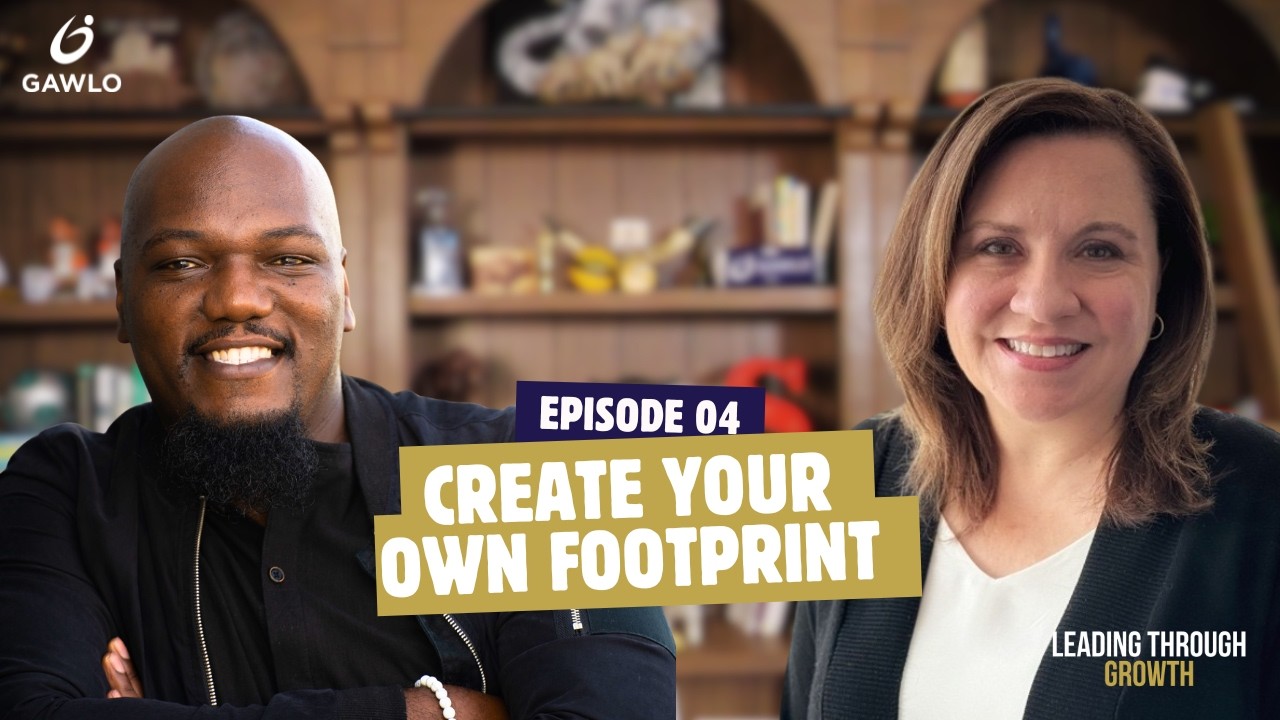
In this episode, Tony sits down with Michelle Baker, Chief People Officer at Forum Credit Union and co-host of the Career Dreams podcast, to explore what it really means to grow into leadership.
Michelle shares the mindset shifts that shape how leaders experience the same challenges differently—why some feel energized while others feel overwhelmed—and how that perspective influences everything from decision-making to team dynamics.
They also unpack the tension between speed and effectiveness, the importance of adapting your leadership to others, and why modeling behavior is one of the most overlooked responsibilities leaders carry.
At the center of the conversation is a simple but powerful idea:
You don’t have to fill someone else’s shoes—you have to create your own footprint.
This episode is for leaders navigating growth, identity, and the responsibility that comes with both.
WEBVTT
1
00:00:00.031 --> 00:00:25.411
I was selected to be the next chief people officer. And when you talk about that head trash story, I'm telling myself, it's a lot of that comparison. And I was hearing it a lot from people, not in a bad way, but just like, oh, we've got big shoes to fill. And then I was talking with somebody, a friend who said, you know, acknowledge the shoes, but create your own footprint.
2
00:00:27.740 --> 00:00:56.191
The voice you just heard is our next guest, Michelle Baker. Michelle Baker is the Chief People Officer at Forum Credit Union and the co-host of the Career Dreams Podcast. If you've ever stepped into a bigger role, you know exactly the type of thought process she's describing. In today's episode, we're gonna talk about the difference between being energized and being overwhelmed, what it really means to lead in your own identity and why growth ultimately comes down to the choices that you make every day.
3
00:00:56.191 --> 00:01:24.254
This is Michelle Baker, and this is Leading Through Growth. I just recognize that not everybody is wired like I am. And so I want to give space and acknowledge the fact that there are some people who might look at that very beefy document, this business plan for a company for the whole year, and see our team kind of sprinkled all over it and think, oh my gosh, that's a lot. That's a lot of work. That's a lot of responsibility. I look at it and I see opportunity and I see collaboration and collaboration.
4
00:01:24.254 --> 00:01:50.613
you know, all of ever the optimist, like, like you said, but I know that not everybody on the team is going to immediately go there. I know that there are some people that might feel a little overwhelmed by that. So I'm going to honor that and recognize it to say, you know, I, I know that that's the case. I hope, I hope it's not, I hope that you don't look at it that way, but, but I know maybe you do, you know, we do a lot of work with fierce conversations as well. And,
5
00:01:50.815 --> 00:02:08.686
In Fierce, they have something that, you know, I've seen it, different interpretations of this, but it makes me think of Fierce, but it's called a context filter. It's that filter that we just run everything through and it's built on our background and our experience and our upbringing and all of those things that make us who we are.
6
00:02:08.686 --> 00:02:25.291
But when we run a situation through that context filter, what are the things that we are assessing about the situation? What are the things, the emotions that we that leads to the emotions that we feel that leads to the behaviors that we demonstrate, you know, and when you walk through it,
7
00:02:25.510 --> 00:02:47.313
You're going to have a great experience or you're going to have a negative experience, but it starts with that mindset at the beginning. So if I go into a situation and I think I don't want to be here, this is going to be a lot of work. This is going to be hard or complicated or, you know, I don't enjoy this. Like, what are the things you're going to notice? You're going to notice all of those negative things that support that viewpoint.
8
00:02:47.313 --> 00:03:16.186
The perspective of the lens that you see the world, the context that you see the world is really incredibly important. It could change your entire experience. And a lot of times, especially when you're moving into a larger role, one of the things that you have to think about is, of course, do I have the skills to do this role? Am I qualified? But sometimes the thing that you think about is, does everybody else think I'm qualified? You know, the optimist in me thought.
9
00:03:16.456 --> 00:03:46.105
I can do this, you know, but it was the, the external doubt. It was the, what are they going to think of me? Are they going to agree that I can do it? I think I can do it. But, you know, so I think some of it is the self-talk or the story that I'm telling myself about, you know, how, how I'm going to be perceived by others. And, you know, if you dig into my, into my disc or predictive index or Myers-Briggs or whatever it is, you know, that's just, you know, that's the head trash that, you know, I carry around with me sometimes. But,
10
00:03:46.932 --> 00:04:13.223
it helps that I love what I do. And so I've been able to face any challenges or headwinds in my role or, you know, the ups and downs that come with, with working, you know, just your work life in general. I've been able to kind of face them with just that, that the value of knowing like, I love what I do. I think it makes a difference for, you know, the organization that I'm supporting maybe not,
11
00:04:13.223 --> 00:04:32.478
doing cartwheels every single day, but, but at the, at the heart of it all, I love what I do. You know, I think that's been put to the test in the past couple of years. And when I stepped into my current role, I was filling, I was named as a successor for somebody who'd been with our organization for 40 years.
12
00:04:33.423 --> 00:04:47.378
And she was our former chief people officer and she was retiring. And I was selected to be the next chief people officer. And when you talk about that head trash story, I'm telling myself, it's a lot of that comparison.
13
00:04:47.969 --> 00:05:12.877
And I was hearing it a lot from people, not in a bad way, but just like, oh, we've got big shoes to fill. And so I was kind of carrying that for a little while, like, oh, big shoes. Yeah, I know. I know. And then I was talking with somebody, a friend who said, you know, acknowledge the shoes, but create your own footprint. And, you know, when you hear something and it's the message you need to hear in the moment, you need to hear it.
14
00:05:12.877 --> 00:05:27.575
And he had no idea that I really needed to hear that that day. I've carried that with me ever since to say, I'm not going to be the same as the person who is in this role before me. You know, if I even tried to be, then, um,
15
00:05:28.570 --> 00:05:42.965
I'm going to let a lot of people down. I'm going to let myself down. That's not what I'm here to do. I'm here to make this role my own. And I'm going to lead with my strengths and capabilities. And so far, so good.
16
00:05:45.074 --> 00:06:15.044
Leadership is never contained to a role. It always expands outward. I worked at a company and we would always talk about leaders having ever expanding influence. And so then leadership becomes really about who you empower and what you build. And Michelle decided to do both when she started her podcast, Career Dreams with her co-host Chase. Now I love this podcast. We were able to have really good podcast conversations. In fact, I asked her if she could compare her podcast
17
00:06:15.044 --> 00:06:42.854
sitcom out there, which one would it be? I think about the show Frazier. And I have no idea why that one really pops into my mind, but something about the balance of the, the, you know, the work and the professionalism, but also just the, the silly kind of undertone to it, which, you know, we have, we have a lot of fun doing the show too. And that was a really fun conversation, but I wanted to go back a step and really understand how this idea started and what was the goal?
18
00:06:43.462 --> 00:06:58.463
I had it in a notebook for a long time. I just had this little page in a notebook that was, you know, I'm a big idea person. And I just kind of had this idea of a podcast. And I knew at the time...
19
00:06:58.463 --> 00:07:22.021
I didn't want it to be a show that I did by myself. You know, I'm just thinking nobody wants to just hear me ramble all the time. You know, I wanted it to be a conversation. But I didn't have anybody on my team at the time that was interested in doing that sort of thing. And so I just kind of had it like one of these days. I'll explore it.
20
00:07:22.021 --> 00:07:50.557
And I thought it would be great as an extension of the internal kind of programming that we do for our leaders and our teammates, just professional development. But it could also be this soft recruiting tool in a way where we post this content externally so people can find it. We talk about what a great place Forum Credit Union is to work. And so if we're kind of giving, it's not about credit unions. It's not.
21
00:07:50.860 --> 00:08:19.092
anything you have to work at Forum to listen to to understand. But we drop little nuggets about life at Forum in our conversations. And when Chase was interviewing for his job at Forum, he mentioned the idea of maybe having a podcast someday. And I clocked that. Like, hmm, he might be the person to do a podcast with. Let's see how this goes.
22
00:08:19.463 --> 00:08:42.734
You know, growth has a need for speed when you think about it. Right. You need speed to market. You need speed to leads. We need speed to sales. We need speed to fulfillment. When you're trying to grow and you start to grow really, really fast, you have to go really, really fast. And when you go really, really fast, a lot of times things slip through the cracks. And if you think about that environment of a fast paced business, a lot of times that's the exact opposite environment you need.
23
00:08:42.734 --> 00:08:54.648
to really develop people. And so what I wanted to know from Michelle is as you go through this fast-paced environment, how do you do it in a way that continues to develop people, develop leaders, but also operate with clarity?
24
00:08:55.373 --> 00:09:16.467
You know, my nature is to move pretty quick in a lot of different situations. I work at a fast pace. I talk at a fast pace. And I need to lean into, I think, what others need sometimes. I just need to recognize that there's a time and a place for that. And there's a time and a place to scale back or just to pause, to listen.
25
00:09:16.467 --> 00:09:41.223
I wouldn't say that I'm, you know, a perfect example of how to balance all of that. I feel like I've gotten better over my career to understand the big picture and knowing that some things are urgent. They really, really are urgent. And there are things that are important, but maybe they are not urgent. You know, I think there's a distinction there. And so whether it's something that...
26
00:09:41.223 --> 00:09:56.528
I'm working on personally or that I'm leading my team through recognizing that we're all kind of coming at it from a different way and then connecting the dots to say, okay, where does this fall on that important versus urgent kind of scale there?
27
00:09:57.102 --> 00:10:26.903
And if we need to reprioritize something, then we need to reprioritize something. A great example, Chase and I had a conversation on the podcast just recently. And we pulled up an example from a one-on-one conversation that he and I were having. And I was just kind of typical me. And I just start talking about an idea. And I'm just kind of rolling with it. And I paused and I just said, okay, okay.
28
00:10:27.140 --> 00:10:53.144
like, how are you doing? Like, are you, cause his face was kind of telling me that he was having a hard time keeping up with me. And you know, if you've listened to the podcast, you know, like Chase is a much more steady personality than, than I am. I'm much more high strung. And he said, you know, my head's spinning a little bit. And so that was my cue to say, okay, okay, hang on. Let's time out. Let's, let's break this down. You,
29
00:10:53.819 --> 00:11:15.605
This right here is the piece we just need to focus on right now. You know, one of my favorite leadership sayings is more is caught than taught. And I think about this when I think about my youngest daughter who, when I came home one day, decided to shave off her eyebrows. Now, no one ever taught her how to do that. But what she told me was after, you know, she was hysterical and crying and I was kind of hysterical and crying.
30
00:11:15.605 --> 00:11:42.554
She told me that she watched me shave every single day. And that's where she got the idea from that you're supposed to shave your head. I didn't even know she was watching me. And so when I asked Michelle about this question, how does she model leadership and growth for her team? I was really in love with her answer because I think it's something that as leaders, we can often lose sight of. We know what everyone else should be doing. But how are we modeling that as an example?
31
00:11:42.655 --> 00:12:09.250
when it goes back to trust and credibility, if I was saying one thing and doing something else, you know, that's no way to build trust with the team that you're leading or with your leader or your peers, you know, you have to be authentic in what you're, what you say is important. You need to be able to back that up by your, by the actions that you demonstrate. You know, this is a really low stakes situation.
32
00:12:09.250 --> 00:12:28.083
I don't know, maybe it's not low stakes, but it's an example. We have an organization that our team is, we're all members of. It's our local association for talent development, ATD, our local central Indiana chapter. And I've volunteered on the board with that organization for a number of years.
33
00:12:28.083 --> 00:12:42.224
And I served nationally with the organization, too. And so the organization itself is near and dear to my heart. But at the core, it's about networking and professional development. And I've gotten to the point where...
34
00:12:44.536 --> 00:12:59.369
I'm not, the content of maybe those professional development sessions isn't always relevant for my role today. I've been in kind of the talent development, HR, you know, kind of space for 25 years.
35
00:13:00.449 --> 00:13:29.879
But I'll tell you what, I don't even really look at what the topic is. I'm still going to show up when I can. And I don't set an example to say, hey, team, it's important that you go. It's important that you network. It's important that you get that professional development. Fill your cup every month when we have these meetings and then not put into my own professional development, my own network, you know, I'm not if I'm not going to model that.
36
00:13:30.908 --> 00:13:52.390
I often say that leadership is not built in workshops. It's built in the everyday actions that you take. And when we think about how we do that at a fast growing pace, a lot of times companies will tell me we don't have time to train. We don't have time to lead. We don't have time to develop our people, which is like something I can argue day in and day out. But here's the reality of it.
37
00:13:52.390 --> 00:14:11.510
You develop while you're doing the work. It's about the habits that you do every single day. And so I want you to really listen closely to Michelle's answer and this conversation that we have about ensuring that people are developing even when you're growing really fast. Something that I've been looking at a lot lately has been the concept of agency.
38
00:14:11.881 --> 00:14:41.345
having agency over yourself and your career and your future, and not just sitting back and waiting for somebody else to, to do it for you. You know, it's, we all, we all have that obligation of agency in our lives. The first thing I would ask is like, you know, who are you? You know, what are your values? What are your strengths? What is it that lights you up that you want to just double down on in your career? Something that you're really good at, something that you just love, something that you're curious about, you know, you know,
39
00:14:41.345 --> 00:14:42.577
What is that?
40
00:14:43.353 --> 00:15:12.985
And then where are those opportunities? And it might not be a full-time job opportunity, but it could be getting involved in a volunteer capacity or raising a hand to be on a project team or getting a mentor or being a mentor. Then there's a little model. It's like a learning framework, you know, that's been around for a long, long time. But it's something that I kind of fall back on sometimes when I think about people's development.
41
00:15:14.032 --> 00:15:41.993
And it's called 70-20-10. And we've talked about it on Career Dreams before. And I've used it as an example. But it's this concept that very little of what we learn and, like, what sticks comes from, like, a classroom or formal training or education. Like, sure, it's really important. Don't get me wrong. We need that for a foundation sometimes. We need training or maybe we go back to school or, you know, whatever it might be. But that's, like, the 10%.
42
00:15:42.500 --> 00:15:58.700
And then the 20% are the relationships that we have. And of course, these are numbers are approximate, but it's the coaches and mentors and peers and leaders and friends where we can get feedback and where we can learn from one another. And, you know, all of that.
43
00:15:59.020 --> 00:16:17.296
makes a big difference. You know, we aren't meant to walk the world alone. And so the people that we can link arms with and get support from and give support to are really important. But that leaves approximately 70%. So, you know, over two thirds of this development pie, so to speak,
44
00:16:17.971 --> 00:16:43.840
is not formal at all. It's the everyday work. It's doing the reps. It's showing up and getting out of our comfort zone and raising a hand and saying yes to a project that we might not really know what we're doing. It's sitting side by side with somebody and job shadowing and then taking that back and sharing it with our team. It's all of these everyday practical things
45
00:16:43.840 --> 00:17:09.845
things that just add up over time that helps us build our skills and our capabilities. And when we can support that with those values and strengths and how we show up and those core skills, that can put you on the path to just a rewarding career, no matter what that might look like. It doesn't matter what field or what path specifically, but those are the things that are kind of fundamental.
46
00:17:09.845 --> 00:17:14.468
to help us kind of set ourselves on a path toward growth and development over time.
47
00:17:15.920 --> 00:17:44.472
That's it. That's the work. It's not about the big moments or the title changes. It's not about the grand things you do. It's the little things. It's the details. It's the reps that you take every single day. If this conversation resonated with you at all, please share with someone who you know is in the middle of their growth journey. And if you haven't yet, make sure you follow this channel so you don't miss what's coming next. I hope you enjoyed it. So glad that you were here. I'm Tony Sanders, and this is Leading Through Growth. I'll see you next time.