Apple Podcasts
 Spotify
 iHeartRadio
 Amazon Music
  Pandora
 007 HR Found Me ft Angie Woods
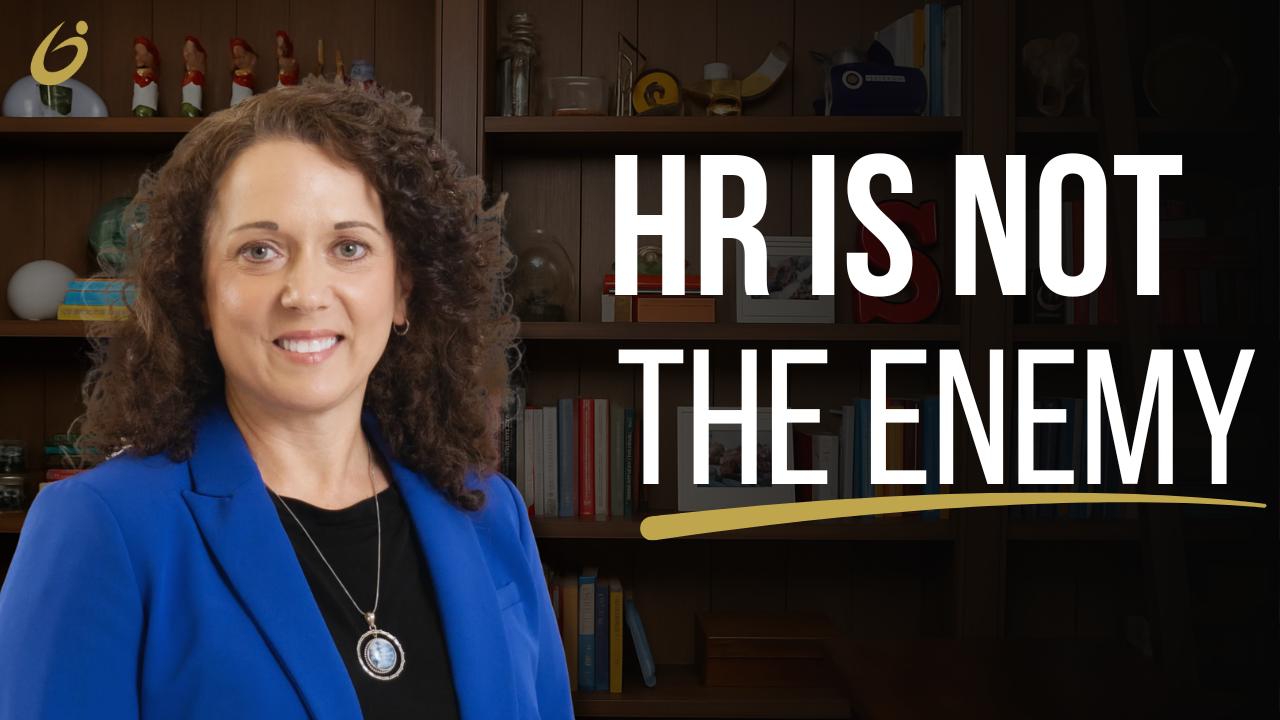
If you've ever scrolled past a TikTok telling you to never trust HR, this episode is for you.
Angie Woods has spent 30 years in human resources — and she's on a mission to change how leaders think about the people function. As a Chief People Officer at a rapidly scaling company, Angie isn't just filling seats. She's building systems, developing leaders, and creating the kind of culture that can actually survive explosive growth.
In this conversation, Tony and Angie dig into what it really takes to grow a company without breaking your people. They talk about the rubber band theory of organizational stretch, why hiring fast is one of the most expensive mistakes a growing company can make, the Wednesday morning leadership development sessions that are changing how her leaders show up, and what vulnerability on stage taught her about showing up more authentically at work.
Angie also clears up some of the biggest misconceptions about HR — and makes a compelling case for why a strong people function isn't a cost center. It's a growth strategy.
If you lead people, build teams, or are navigating the chaos of a fast-growing organization, this one is worth your full attention.
What you'll learn:
- Why growth-stage companies need to hire for adaptability, not just skill
- How competency frameworks connect hiring, onboarding, and performance
- What HR leaders wish business leaders understood about partnership
- How to give people hope through change without pretending you have all the answers
WEBVTT
1
00:00:00.031 --> 00:00:15.742
I see things like HR is not your friend. HR is for the company, not for you. I literally saw one today and she said, only go to HR when and if you're ready to sue and quit the company. Be ready for any outcome.
2
00:00:15.742 --> 00:00:41.864
In today's episode of Leading Through Growth, I am joined by my friend Angie Woods. Angie is the executive vice president of Gregory and Appel Growing Company, and she is leading the charge as it relates to human resources. And in this episode, we get a chance to talk about it all, even as far as talking about TikTok comments about HR. If you've ever took two seconds to scroll TikTok, just looking for HR things, it's
3
00:00:41.864 --> 00:01:05.388
It can get pretty hairy. It can get pretty scary. But Angie has really great responses to all of those comments. And she lays it out there just like she would with you walked into her office with some of those same comments. And so I really enjoyed this episode. We jump right in talking about culture, talking about what it's like to work at a fast pace growing organizations and how sometimes that culture isn't for everybody.
4
00:01:05.388 --> 00:01:33.772
The culture at a fast pace growing company, or even let's talk about environment, because I think culture and environment sometimes can be different. That environment is not for everyone. Just like a company that decides, OK, we're just going to kind of pace and level out our growth. That's not for everyone either. Even in my career in L&D, I've been to places where they're just like, yeah, we got this legacy program that we've been doing for the last 30 years. And we just want you to manage that. Don't change anything. Don't tweak anything. Don't do anything new.
5
00:01:33.772 --> 00:02:02.982
And I'm like, I'm going to update my resume because I don't want to work here anymore because that's not my thing. But then you go to a growing company and everything is changing and you got to build new stuff. And the stuff that we were doing before when we were a hundred person company worked, but now we're a 500 person company doesn't work anymore. That's the kind of stuff that energizes me. And so the fact that you, from an HR perspective or even just from a business perspective, that you recognize that like, hey, we're going to make some changes because we're going to stretch people. Some people are not going to like that and we're not mad at that. That's OK. Yeah.
6
00:02:02.982 --> 00:02:24.160
this is the direction that we're going in. I think that that is really, really good to think about. And then paired with that, I love how you are starting to prepare the organization for where you're going. There are a lot of times where companies from a business perspective, they say, okay, we're gonna grow to here in the next five years.
7
00:02:24.160 --> 00:02:49.237
But then sometimes they don't think about how we should be preparing our people to make sure that we can keep up to that with that growth. Your rubber band analogy to make sure that we were stretching what we're not breaking. I'm curious to know that intentionality that you bring to that. Where did you learn that? Is that something that you just gathered over the years or, you know, is there times where maybe that didn't happen and you saw the effects of it? Where did you learn just to kind of make sure people are prepped for that?
8
00:02:49.777 --> 00:03:04.002
Yeah. And I will, I will not pretend to have all the answers. I feel like we are, the best way to learn is that experience. I mean, I quote this a lot to kind of the 70, 2010, like the best way to learn is that 70% you're in it, you're in the job, it's the experience you're learning by doing. And,
9
00:03:04.492 --> 00:03:29.551
living, right? 20% is coaching and mentoring and 10% is more of that formal education. So I really lean into that 70%. And it's the changed leadership. And just, I know for myself, just being, and I'm the eternal optimist too. So I look at that and what you just described about, hey, the maintaining versus the building, I get energized by the building. So being able to be in
10
00:03:29.551 --> 00:03:53.007
a company that is building new processes, new workflows, new technology. Like I am like a kid in a candy store. This is so much fun for me, but it's not for everybody. And so I pride myself on meeting people where they are and really just saying in that whole change curve. And I buy into a lot of Gallup is that hope. How do I give people hope? So one thing we've worked on, it's a fairly new
11
00:03:53.007 --> 00:04:13.156
redefine executive team where we're getting into that cadence of EOS where it's quarter by quarter. So we do have a one year, a three year, a five year plan. For me, it's like, can we just take it quarter by quarter in like one year? I feel like the, the whole small bites of the elephant, right? Just giving individuals like, what are we doing this quarter and doing a look back on, Hey, what's the,
12
00:04:13.156 --> 00:04:35.701
Don't forget, like celebrate the small wins, looking back, saying there's a lot of change. But for one thing, I was like, look back and look what we did in Q1. Look at all of these things we said we were going to do and just seeing them checked off the list. Like it's a visual representation of, oh, my goodness, look at all this great stuff we did. And yes, we have a lot that we're doing in Q1. We can do it. We just proved that we did it in Q1. And let's celebrate that.
13
00:04:35.870 --> 00:04:56.035
And let's make sure that we're, you know, we're supporting each other through Q2 to get all of these things done. It's doable. We can do it if we work together. And so I talked a lot yesterday about just the energy that we bring. Like we have to have that resilience, you know, the optimism to say it's doable. We can do this if we work together, if we show up with.
14
00:04:56.035 --> 00:05:24.132
you know, negative energy or resistance or complaining all day. Like we're going to, we're going to be stuck. I don't want to be stuck. So it's just helping people move through that change curve. Like I use this analogy, get into the Valley with people, not to stay there or commiserate with a hand to pull them out. But it's just recognizing we're all, we're all humans and we've got to help each other. Like we're all dysregulated people with their chaotic energy that we bring to work and we've got to help just calm people down and,
15
00:05:24.470 --> 00:05:38.290
Give them hope to get through that change curve. It's we don't have all the answers. We're just doing the best we can do to meet people where we are. At least that for me, I'm doing the best I can do to meet people where they are, listen and help them see we can do this. If we do it together.
16
00:05:38.476 --> 00:06:01.240
Yeah, I love that because I think, of course, impact matters, right? If we don't drive results, then, you know, that comes with its own consequences. But I also think intention matters a lot, especially in a fast paced growing environment. Like you have to be intentional. And so the fact that you're having those conversations, that you are leaning into those things, I think is really good. I want to take a step back because you're.
17
00:06:01.240 --> 00:06:23.279
You're sharing so much wisdom already a few minutes into this interview. And if I'm a listener, I'm like, OK, where did that come from? So when I look at your career, it's like 30 years of HR experience. You know, right out of college, it seems like you went right into it. Did you always have this in your mind that you were going to work in HR or was was this, you know, like something that just kind of happened?
18
00:06:23.583 --> 00:06:46.111
Something that just happened. I say HR found me. I worked full time through college. And so the story is I worked a full time job, part time job. I went to started out at Indiana University Columbus campus. And I worked at Cummins full time in the mall part time and took a full load of classes. And I was between it's so funny looking back now I was between HR and marketing.
19
00:06:46.111 --> 00:07:11.913
That was kind of my fork in the road. And the job I had at Cummins was in their international human resources department. It is an analyst role, so more of a support role. And I got exposure. I guess I was, my career journey is I'm so blessed to be in the right place at the right time, but to be there surrounded by so many wicked smart individuals who, and to be able to see that, that global international perspective of all of Cummins' locations and, you know,
20
00:07:11.913 --> 00:07:35.740
dealing with expats and just, I had great mentors and teachers. And so just having that experience at that, that fork in the road, I'm like, I love this being able to care for people and just get exposure to so much recruiting and compensation and employee relations and just the whole gamut that really launched me through the path of HR. And I have never looked back. It's just, it found me.
21
00:07:35.740 --> 00:07:56.328
Yeah, I like that experience of HR and marketing. So business is my first love. I always say that I'm a business person first and I'm a leadership development consultant second. Right under that, though, is marketing for me. I love I have marketing books on the shelf behind me that I read and share and give away. Probably one of my favorites. I was trying to see which one I had. Oh, business.
22
00:07:57.543 --> 00:08:27.209
Purple Cow by Seth Godin. Seth Godin is probably one of my, he's probably one of my favorite authors. But anyway, I wonder if that shapes how you go about HR initiatives, having a little bit of a marketing mindset and the business background. Do you think that influences how you go about gaining buy-in with HR initiatives or rolling things out? I do. It's so funny now. Now, if I look back on my HR career,
23
00:08:27.698 --> 00:08:56.099
I'm highly collaborative with our marketing department because I feel like whether you market to clients or your market to colleagues, it's, it's about branding. It's about the messaging. It's about, I'm going to call it kind of a drip campaign, which we and how you communicate multiple different ways, a human, I can speak for myself as a human. I need to hear things and see things multiple different times, multiple different ways so that it sinks in. So I do look at that from the communication out to our employees and
24
00:08:56.099 --> 00:09:08.789
I collaborate with our current marketing team a lot and they've got a small scrappy team too. So we've got a team of three of HR. We've got, they've got a team of three and it's, it's a lot of collaborating, just getting content out there. What do we want our messaging to be? Words matter.
25
00:09:09.042 --> 00:09:29.562
So how we communicate things to our employees so that it sticks and gathering feedback and showing that we're listening and what do we do with it? How do we communicate? Hey, we asked, we heard you were listening. Here's what we're doing. Yeah. I collaborate marketing people. I would say that if I had all, all of my, my, my, my teams in front of me, I would say you're all my favorites. Yeah.
26
00:09:29.562 --> 00:09:50.453
But I will tell you, I mean, just I'm a kid in a candy store. If I get to if I get to collaborate with more marketing people, because we speak the same language, we just have different audiences for the messages, whether it's clients, prospective clients, colleagues. There's so much in our lap in parallel. Yes, I hadn't thought about that, but I feel like I'm able to intertwine those two career paths together, at least in my experience.
27
00:09:51.112 --> 00:10:07.362
HR people who have business interests outside of HR usually have a bigger impact. There's a lot of conversation in HR about having a seat at the table, which I do understand because I think the function, when we look at the overall business, the function is important. But sometimes...
28
00:10:07.362 --> 00:10:22.364
C-suite executive, CEO, CFO, COO, they look at HR. It's like, okay, they're over there just to stop bad things from happening to us. We're over here to grow the business. And I know that strategic HR can step up and say, actually, no, we can help you.
29
00:10:22.567 --> 00:10:49.094
also grow the business, but you got to be able to speak their language. You got to be able to understand what's important to them. And so when I think about your ability to do this at multiple companies and be collaborative and really marry people and performance, I think one of the reasons why you've had success at that is because you have a business mind outside of HR and you see how those dots connect. So you can speak the language, you can sit at the table and have those conversations.
30
00:10:49.094 --> 00:11:03.708
While being a strategic HR and not just functional HR, please don't let bad things happen, like get us sued and have compliance issues. It's like we can we can strategically be a part of growth. So that's what made me make that connection for you.
31
00:11:03.877 --> 00:11:22.270
Yeah. It's all about relationships. Like I'm naturally curious. I mean, if you look, if you look at my Gallup, my Gallup strengths, my Clifton strengths report, I'm mostly blue. Like those relationships to me matter. I really want to know what are your greatest challenges? What are your greatest opportunities? What are your greatest fears? And what do you keep you up at night?
32
00:11:22.270 --> 00:11:37.947
And I feel like my role is to be a partner and to help solve, look ahead and help, you know, help us prepare for that one year, three year, five year from a talent strategy. And also to help mitigate the fears of my business leaders to say, well, let me help. Let's all those together. Very highly relational, highly collaborative.
33
00:11:38.656 --> 00:12:00.712
Yeah. You kind of mentioned like being able to ease some of those fears as you think about the growth trajectory of a business and you think about what it's going to take. Right. How many open recs we're going to have, how we're going to restructure things, bring in new people, you know, make sure that we're maintaining clients that we have and also going to get new clients.
34
00:12:00.712 --> 00:12:27.020
Are there certain things that you're looking for or just kind of keeping your eye on or your pulse on as we grow? Like, OK, I know that we're growing and we're going fast. Things are going well, but we need to make sure that we keep an eye on how our leaders are doing, for example. Or we need to keep an eye on how engaged we are with our team members or what culture is doing. What are some of those things that you just kind of maybe in the back of your mind are like, OK, we're doing good, but let me keep an eye on these few things?
35
00:12:27.391 --> 00:12:50.982
Yeah. Oh gosh. I would say yes to all of what you just said. It's, it's a lot. And so we, in my current company, we've promoted a lot with them. We've, we've, we've restructured in a right way, exciting way, which has created a lot of promotional opportunities, individuals promoted. So new leaders, either in new leaders, new to leadership or new leadership from the outside coming in. So it's just an interesting time.
36
00:12:50.982 --> 00:12:57.749
So I'm pouring a lot into leadership development, which has been so much fun. Every Wednesday morning. And it's...
37
00:12:58.205 --> 00:13:23.517
I'm again, beyond grateful to have that audience every Wednesday morning and short burst. So it is, I'm moving at that pace. It's like, I've got to take content or, or, you know, concepts into short digestible chunks because that's all, again, they're busy. And so every Wednesday morning we're in an informal and we're just, we're doing either round table and crowd crowdsourcing of topics or it's just short bursts of content.
38
00:13:23.973 --> 00:13:32.950
And so it's pouring into the leaders, which I know pour into the leaders, the leaders can pour into their, their team. So it's a, it's an amplification effect.
39
00:13:33.372 --> 00:13:53.993
And having them not be having them be, we're being intentional about who we're bringing in. So with the amount of change and just a lot happening, being mindful of the individuals that we, we select to come in. And so I've introduced competencies, like really looking at, I use the visual of the posting. It's not just, you know,
40
00:13:53.993 --> 00:14:12.151
crafting something together and throwing it out there is like, we need to be intentional about words matter. That is our ability to attract. And he's going to read that posting and say, well, yeah, I can see myself in this or not. So we have to be intentional about the competencies, how we describe the role, the fact that we're, we're dealing with a lot of change. I want to make sure that that's mentioned in there. So something who's flexible, adaptable,
41
00:14:12.151 --> 00:14:29.380
agile, you know, agile for learning. Like we're, it's not a status quo. You don't come in and you learn and you're going to make the same widgets for the next, you know, three years. No, we're going to continue to level up, continue to move. And we need someone who can grow and move with us. So one is making sure that we are attracting the right people
42
00:14:29.380 --> 00:14:53.748
talent for where we are in the business and having leaders be trained up on how do you be patient to not just take the next, next, you know, again, warm pulse, but be mindful of who you're bringing into. Can they do the job? Do they want to do the job? Are they going to fit into your team? Because there's other macro culture and there's micro culture for each and every team, right? So just having them think through that,
43
00:14:53.748 --> 00:15:03.383
To keep, again, just keep things on track and make sure that we're not causing more disruption, stabilize, like team by team.
44
00:15:04.480 --> 00:15:25.000
And then working on onboarding. So it's not just bringing in the right talent, but hello leader. We've got to make sure we are crafting an intentional development plan and we're checking in to make sure, hey, how are you doing? Are you acclimating? Like it's a whole system. And again, I will not say we're doing it perfectly. It's an iterative process and we're way better today than what we were nine months ago and we'll be better.
45
00:15:25.000 --> 00:15:43.647
next month and the month after it's it's we're learning and I'm learning so much from them so it's learning for me as well but attracting the right talent how we deal with feedback input like making sure that we're listening and being very honest to say we can't do everything we're listening and we want to take your feedback but just being mindful that
46
00:15:43.647 --> 00:16:02.800
We only have so many resources of capacity, so much funding, and we've got a roadmap. It has to fit on the roadmap. Yeah. If everything's a priority, nothing's a priority. So we've got to just be truthful to say it may not be a no, it's a not yet. Thank you for the feedback. Continuing, we're gathering this. It may just be not yet.
47
00:16:02.800 --> 00:16:30.948
And so a lot of transparency, a lot of communication, and just meeting people where they are. It's a lot. That's beautiful. I mean, you may not be perfect. No one is. But you have thought about it. I can tell that you all have thought about it. You've given it great thought and great intention. I especially love that example. I've been the manager that's so desperate, so overwhelmed, so ready to fill this spot that we've been having open for what feels like years, but probably a couple of weeks.
48
00:16:30.948 --> 00:16:47.890
But it feels like it feels like I've never had anybody in this spot or I haven't had somebody in six months. And you look, it's really only been two weeks and you get desperate, right? You get desperate and it's like, OK, I've literally heard managers say this. This isn't good. But like the next person that walks through that door, that's halfway decent.
49
00:16:47.890 --> 00:17:05.035
I'm just hiring them because I'm sick of dealing with whatever the chaos is of not having that position field. And it works seemingly short term, but then long term, we get ourselves in a bind. Right. You really get yourself in a position where we've got somebody here and we're doing ourselves a disservice.
50
00:17:05.035 --> 00:17:26.922
from the manager perspective, we're doing the company a disservice. We're also doing that individual a disservice too, right? Because if they are truly not a good fit and we hire them, they're going to be working every day to try to do their best. And it's not going to be adding up for whatever reasons, right? They just didn't fit the bill. And so I tell leaders all the time, like nobody wakes up every day and says, man, I can't wait to go to work and suck today.
51
00:17:26.922 --> 00:17:45.434
That's not what happens. They want to do a good job, but it's our it's our job to put them in a position to do a good job. And it starts with hiring. It starts with picking the right talent and then into onboarding and training and development, just like you said so beautifully. So I love that you are focused on that and thinking about that. I think it's critical. Yeah.
52
00:17:45.788 --> 00:18:02.495
Yeah, absolutely. We've had some misses and we were learning from those misses. Sometimes it's what you just described when we have a person who's not a fit, I don't want to say a bad hire, I'm just going to say not a fit. There are learning lessons. So I use as a teaching moment to say, okay, what did we see during the hiring process that we can learn from?
53
00:18:02.495 --> 00:18:25.630
And so did we hire too fast? Did we not ask the right questions? Did we do, did we do some digging as behavior-based interview questions? And we dig through and follow up to be able to gather those, that evidence. And I'm seeing that I'm seeing, it's not to blame or shame. It's what can we learn from this? So we post it again, we take our time, we're more intentional. So using that as teaching moments, there's been a couple of those lately and I'm like, all right, I'm here to help you. We're going to learn from this.
54
00:18:26.238 --> 00:18:50.909
Yeah. And leaning into those competencies, we're doing a competency project right now. We're training the leaders on how to interview for these competencies. Once we kind of go away from a job description and we look at a success profile to say, okay, we have a good description of the job, but what does success look like? Then we can kind of reverse engineer that into an interview scorecard to say, okay, if we know these are the competencies that we need for success,
55
00:18:50.909 --> 00:19:13.437
We know what we need to look at for a candidate. It clarifies for us what we want, but also what we don't want. Not necessarily a bad person, but not a good fit for this particular role. And so we can start to ask some questions to really be able to score whether or not someone has that as a competency. And even if we decide to hire them right and we know that they're deficient in that competency.
56
00:19:13.437 --> 00:19:36.590
we should still also have a development roadmap that we have resources to fill so that we can say, OK, we're going to bring this person in. But they may take a little bit longer to onboard. They may take a little bit longer to kind of get up and running, you know, at a proficient level. But we also have the resources to back that up and we know exactly where they're deficient as it relates to competency. So I love your work on competencies that you're leaning into that, too, I think.
57
00:19:36.590 --> 00:20:01.700
And I love that's the whole purpose. If you create it during the hiring process, it ties into the development plan. It ties into the performance reflections. You're able to, it ties into promotional criteria. It just, the whole system, there's so much built on that. If you get the competencies right up front, I love what you're building. Yeah. That's exactly what it's all about. Key words, system, system. System. Yes. I got a chance to see you speak at our good friend. We both love Rebecca.
58
00:20:02.189 --> 00:20:28.582
And I got a chance to see you speak. I told you before we started recording that I brought my daughter and my sister who really, really loved the event. I know that there's a lot of work that goes into that night without giving up too much because I want Rebecca to do this event again, even though she said she might. Rebecca, if you're watching this, Angie and I both want you to do this. We both want you to do this again. But just talk to Tom and I.
59
00:20:28.582 --> 00:20:34.775
Talk to us about how important it was for you to participate in something like this and some of the work that went into preparing for that night.
60
00:20:35.298 --> 00:21:00.408
Oh, yes. And I said on stage, like I literally, I was not ready at the time. She said, what if I create an eighth spot this year? Like I was prepared to every year and I've been watching it since I think season two every year. And so every year I would say, and Rebecca and I have the same conversation, like, okay, is this year the year? I'm like, oh, not, not yet. There was always a reason that I tried to do it again. I'm going to be the first one to sign up for season eight.
61
00:21:00.408 --> 00:21:26.446
And I still, it's funny. I look back and I was listening to the talk again recently when the videos came out and I'm like, I still can't believe I did it. I said yes to this. It's one of the most amazing experiences, just the group that came together. And Rebecca is amazing. Just the trust and the safe space that she creates for that seven month experience where we come together and we gel together.
62
00:21:26.446 --> 00:21:43.372
And she said for our kickoff, it was more around and she had tools. I mean, you know, she's just full of tools and wisdom and things. And so she equipped us along the way of different things. But it was also about letting go of things that no longer serve us, like just thinking through that, the head trash or the.
63
00:21:43.372 --> 00:22:03.757
people pleasing or the insecurities or imposter syndrome, like you name it. There's just all kinds of stuff that we carry and allowing us throughout that experience to just let it go and step in and stop playing small and just step into a space. It's more authentic. And she just, there was so many, I mean, so much like we could talk for hours on just what I, what that experience was.
64
00:22:03.959 --> 00:22:26.842
gave me personally and what I gave from a bit. Um, at the point we started really talking about what stories we had. And I think each one of us, I think all eight of us said, I don't know. I don't know if I got anything that's worthy of being told on this, on the stage. And she, she gave us a homework assignment and she said, I want you to write in your journals, 25 stories. And I'm thinking, I don't even, I can't, I just told you, I don't even have one story. You want me to come up with 25?
65
00:22:27.567 --> 00:22:47.378
But we wrote him down and then we spent a whole session just sharing some, again, narrowing it down. She had a whole exercise where we narrowed it down, paired us up and we shared with each other. And it was almost like the group chose for us. Like when we heard the energy, as I would describe something, the whole room would go, that's it. That's your story. Like you got to go with that. Yeah.
66
00:22:47.648 --> 00:23:12.725
And so having that group and that safe space help discern which ones were truly because they could feel it when we start talking about this or telling a little bit, they're like, oh, that's it. Like, you got to go with that story. It was amazing. And then practice sessions and drafting it. And then Rebecca would go back and forth and just help us craft it to make sure that it was our words and it was authentic and just there were our fingerprints all over it. She was a great guide for us.
67
00:23:13.113 --> 00:23:23.002
And then we practiced and we practiced. And I think she wanted us to practice like three times a day. It ended up being like, I mean, just hundreds of times we would go through it, which seemed daunting. Yeah. Yeah.
68
00:23:23.086 --> 00:23:47.065
And even the day of, like we did rehearsal on the day of, and I will tell you, even though I had practiced throughout weeks and weeks, recorded myself and just recorded it in front of practice in front of the group, there's something about standing on that stage. So at rehearsal, like my mind went blank. I mean, literally, I'm like, I forgot every single line during rehearsal. Yeah.
69
00:23:47.065 --> 00:24:11.517
And so just the way she guided us throughout that whole day to make sure that we were calm and grounded and supported. I mean, she, that whole day, she wanted us to be in a bubble. Like we were to be in our bubble together as a group. And she made sure we stayed, you know, again, not mixing with the crowd. I wouldn't say this. She's just like, your energy is like sacred that day. Like just, she was there to support us and not having all this, you know, energetic, you know,
70
00:24:11.517 --> 00:24:25.675
chaotic energy or nervousness. And so she just, she was a great guide and steward that day to make sure we, we stayed in our bubble throughout the day and that we showed up on stage, calm, grounded, supported, and felt safe and loved. Like she,
71
00:24:25.962 --> 00:24:42.449
I can't say enough good things about how she guided us through that whole seven-month journey. And certainly, we got down to practicing and honing our story. That culture that you're talking about. No, well, it was insightful because I've never obviously been through the process, but I go to the events and...
72
00:24:42.449 --> 00:25:00.353
The community, the love, the care, the preparation, all of that is evident the night of when we see you on stage and, you know, everyone takes a stage and they share their story. And it's so empowering. And it really it really touches people. All of that is felt in the room that night. Right. And so I think that that's good.
73
00:25:00.978 --> 00:25:28.298
I also I also know from a speaking perspective is probably pretty challenging. It's not like you or I getting on stage talking about, you know, the grow coaching model or, you know, talking about resilience or something. It's like I'm talking about a real story from my life and something that, you know, could be potentially sensitive. You shared something that night and I made a note of it. You said vulnerability is a gift that we give to ourselves and those we love. Yeah.
74
00:25:28.298 --> 00:25:46.085
vulnerability is a gift. It can also be scary. How do you push yourself to be vulnerable in those moments and see it as a gift as opposed to something that maybe exposes me that's going to not turn out in a favorable manner?
75
00:25:46.321 --> 00:26:03.517
Yeah, such a great question. And I will tell you, there were many of us in that group, if not all of us, that did second guess our stories. Like, I mean, coming down to the wires, like, oh, I don't know if I can tell the story. Like, there are those that are going to be in the audience that don't know this about me or don't know this part of the story. And
76
00:26:03.517 --> 00:26:21.877
And Rebecca just had to reassure us that this, this is our story, right? This is my story to tell. And, and invulnerability, I think it just opens the door that, I mean, somebody in that audience, you just have to believe that there's at least one person. This is how I look at it. There's just one person in the audience that needs to hear my story and says, ah,
77
00:26:22.383 --> 00:26:40.726
Me too. And just raises her hand and says, hey, can we connect? Can we have a conversation? Can you help me? I have some questions about whatever it is, any of our stories. That's what makes it all worth it. And so she helped us just help us see the purpose in it and that it's not about us. It's not about ego.
78
00:26:40.726 --> 00:26:55.019
It's not about, you know, again, it's about just giving permission to others to be able to say, hey, we're all we all have our stuff. We all have moments we've gone through. We all have. And if we share it, it allows others to do the same. So just imagining that ripple effect.
79
00:26:55.205 --> 00:27:15.134
When we let down the guard and it's hard to do, some of this is harder than others, but it just, it allows others to feel safe and do the same. And it's the ripple effect of the good that we can do to allow each other to heal and be the best versions of the humans that we can be. And hearing the stories too of just who comes up and says, wow, your story really resonated with me.
80
00:27:15.134 --> 00:27:39.215
Or, hey, can we grab coffee and talk about this? And she told us at the very beginning, this is going to happen. And she's right. It's amazing. Yeah. It's a relationship builder. There's a, as you know, like when I do these episodes, I don't come in with a preconceived theme. Usually I just have a great conversation with a great person and kind of a theme emerges. The emerging theme of this conversation has been.
81
00:27:39.215 --> 00:27:55.955
whether it's personal or professional or organizational growth, it's necessary to hold on to people tightly and have really solid relationships while you go through it. Growth can be hard. It can be challenging. It can be scaring. But if you have really good people around you, whether it's a community with,
82
00:27:55.955 --> 00:28:21.622
you know, the Rise and Thrive community or whether it's leaders at your organization or someone there just to kind of support you, it makes it more manageable to go through that growth. And so thank you for sharing that with us. That's I know those weren't exactly your words, but that's the thing that I'm that I'm pulling from your story and what you share. It's like, oh, yeah, that people element, it's necessary and needed for really any stage of growth, no matter what aspect of life.
83
00:28:22.027 --> 00:28:37.062
Yeah, we are built for connection. Rebecca, those are Rebecca's words. We are, we as humans are built for connection and we need each other to get through this thing called life. Like we, it's, it's all about helping each other. Yeah. Yeah. Thank you. I love how you phrased that. Perfect.
84
00:28:37.062 --> 00:29:04.957
Well, listen, I want to get you out of here. But before we do, if you will indulge me, I have I have been scrolling on TikTok and there are so many misconceptions about HR on TikTok. I see things like HR is not your friend. HR is for the company, not for you. I literally saw one today and she said, only go to HR when and if you're ready to sue and quit the company.
85
00:29:04.957 --> 00:29:24.734
Be ready for any outcome. And if you go to a lawyer or EEOC without going to HR first, the company will say they aren't aware of anything. And she literally gives an entire legal breakdown of how to go with HR. There are videos saying, you know, before you if you want HR to do something, use these key buzzwords. How?
86
00:29:24.734 --> 00:29:48.376
hostile, bully, toxic workplace, those types of things to actually get HR's attention. I've worked around and with HR people enough to know that that's not true, but I would love for them to hear it from someone who has went their entire career in HR for 30 years, right? At the executive level as well. Just clear up any misconceptions that you've even heard about HR professionals.
87
00:29:49.253 --> 00:30:19.240
Yes. That, that makes me so sad when I hear that. Right. And if I run into somebody who feels that way, or I feel some resistance or someone comes into my office and says, you know, in my 20 years, I've never come to HR. I'm like, why, why? And it makes me curious to know what has happened. What are the reasons behind that? Like, what has that person experienced? Or if I, you know, if I'm new to a company and I'm experienced a leader who just, you know, I get, I get the highest been like, I'll call you when I call you when I need you. Like,
88
00:30:19.240 --> 00:30:38.444
I lean in to say, well, help me understand, like, what's been your experience with HR? How have you partnered with HR or not partnered with HR in the past? Like ask a lot of questions because I want to know, right? I want to know what has occurred so that I've got that history and that pain, whatever has caused that person to feel that way about HR.
89
00:30:38.444 --> 00:30:54.138
And then because I'm a little competitive, but I make it my challenge to say, how can I win this person over? How can I change this person's perception? Right. What can I do to show up differently and be the type of HR person, be myself and be authentic?
90
00:30:54.475 --> 00:31:11.772
but to be able to show that HR is for everybody in the organization. And I tell my team a lot. I say this a lot. And I even said it yesterday in the all-company meeting is we're all here to serve the client. We do this in individual, indirectly or directly. I feel like my role is to serve...
91
00:31:11.772 --> 00:31:38.266
my HR team and our colleagues and our leaders, like our, you know, our organization, we are, we exist to serve them so that they can serve the client, whether however many degrees separated from the client, but we're here to serve like very servant hearted. We're not the no police. And I love to find solutions like, like bring me, bring me something that, you know, they have questions about, I want to point, I want to point them to here are the resources here, here you find the answers. If it's not clear, let me help.
92
00:31:38.266 --> 00:32:02.532
provide clarity. If there's a policy that doesn't work for our business, if it's not relevant anymore, okay, let's just take a look at it. Let's find a solution. If there's something that doesn't exist that should, Hey, let's find the solution that's relevant for us. I like to look outside and say, who's doing this. Then I'd like to recreate the wheel. So it's like there's stuff out there, go find solutions, but bring it inside and make it relevant for the organization and
93
00:32:02.532 --> 00:32:15.965
for wherever the organization is. And things will tweak and change as we grow and develop and evolve. We have to evolve and change with. But I'm very much a problem solver and I want to do it with. Highly collaborative. I don't like to say no unless I have to say no.
94
00:32:16.657 --> 00:32:38.257
Right. But yeah, but I, but I get like, and you see the HR people that are portrayed on TV too, right? You've got Toby from the office. You've got just mean, evil HR people. Like you just, we're not portrayed on media very, very politely either. And there are, again, lots of HR folks out there just like, and there are some, probably some that have it.
95
00:32:39.320 --> 00:33:04.025
I don't know, justly earned some of the reputation that you get. Right. But in any profession, like there are some great engineers, not great engineers, great doctors, not so great. Like HR is no different. Right. Yeah. I like that you rooted it in like what, what something must have happened to make you feel that way. That's kind of what I think I wouldn't have said it in those words, but like when I'm seeing some of these comments, it's like, I want to give you a hug.
96
00:33:04.025 --> 00:33:29.860
Because something horrible clearly happened to make you feel this way, you know, against HR. And they see it as like we're like an HR person is not there to help them or to be a resource or to problem solve. Like you said so well, my least favorite one. And I'm like HR adjacent. I'm like L&D, you know, business consultant over here. But still, they'll say, oh, can't talk about anything right now. HR is in the room.
97
00:33:29.860 --> 00:33:56.506
can't make that joke. HR is in the room. It's like, we're not, we're not the police, right? It's not like we're going to say, oh, you made a joke. Come see me in my office. It's like, that's not how that works. But whether it's programming through media or past workplace incidents, you know, some people do have that, you know, outlook. And I appreciate people like you that are working to change that in your everyday life, how you function at work. That's really good.
98
00:33:56.506 --> 00:34:19.625
Hope you enjoyed this episode. In the comments, let me know what is your favorite part from this episode? What was that light bulb moment for you that just said, wow, that really sticks out to me. I'm going to do that in my organization. If you like this show, make sure you subscribe and share it with a friend who is currently leading through growth. I'm sure that they'll find something here that will be helpful just like you did. And I will see you on the next episode.